Published · By Frank DeLozier, Owner & Master Fence Builder
Barbed wire is the economical cattle boundary; field fence contains smaller stock and keeps predators out.
Use barbed wire for an economical cattle boundary or cross-fence where cost per foot matters over long runs. Use field (woven) fence to contain smaller livestock, goats, sheep, hogs, and calves, that slip through barbed wire, and to keep predators out. Many Oklahoma operations use both, matching each to the job.
Two Different Tools for Two Different Jobs
Barbed wire and field fence are the two most common wire fences on Oklahoma farms and ranches, and the choice between them is not about which is "better", it is about which fits the job. They contain different animals, cost different amounts, and suit different situations, so understanding what each does well is the key to fencing land sensibly.
The short version: barbed wire is the economical cattle fence for long boundaries, and field fence is the tighter barrier for smaller stock and predator control. Many operations run both. This guide compares them across the factors that actually decide the choice.
What Barbed Wire Is Best For
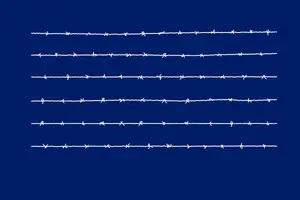
Barbed wire is strands of twisted wire with barbs, strung under tension on posts, usually several strands high. Its strengths are cost and coverage: it is economical per foot and goes up efficiently over long distances, which makes it the default for cattle boundary fences and cross-fencing across large acreage.
The barbs discourage cattle from leaning into and pushing through the fence. For containing cattle and larger livestock and dividing pasture affordably, barbed wire is hard to beat, which is why so much Oklahoma ranchland is fenced with it. Where cattle are the only concern and the runs are long, it is usually the practical choice.
What Field Fence Is Best For
Field fence (woven or net wire) is a grid of wires with no large gaps, forming a continuous barrier from top to bottom. That grid is exactly what contains smaller animals, goats, sheep, hogs, and calves, that would walk right through the gaps in barbed wire. It also does a far better job of keeping predators out.
If you run anything smaller than cattle, or you need to keep coyotes and other predators away from stock, field fence is the answer where barbed wire falls short. It is a solid barrier rather than a series of strands, which is what makes it work for the animals barbed wire cannot hold.
Cost Comparison
Cost is one of the biggest differences. Barbed wire is the more economical option, both the material and the installation are less per foot, which is a major advantage over the long runs common on ranches. Field fence costs more in material and takes more labor to install.
Rather than quote figures that would not fit your project, we price your specific fence, but the ranking is consistent: barbed wire is cheaper per foot than field fence. That cost difference is why operations often reserve field fence for the areas that truly need it and use barbed wire for straightforward cattle boundaries.
Safety and Livestock Considerations
Safety depends on the animal. Barbed wire works for cattle but is not appropriate for horses, the barbs can cause serious injury to horses, which are more prone to running into and getting caught in fencing. For horses, a barbless option is the safe choice, as covered in our horse fence guide.
Field fence has no barbs on the woven portion (though barbed wire is sometimes added along the top), making it gentler on animals that might contact it. When choosing, factor in not just whether the fence contains the animal but whether it is safe for that animal, the two are not the same.
Containing vs. Keeping Out
Think about direction: are you keeping animals in, keeping animals out, or both? Barbed wire is primarily about keeping cattle in and does little to stop small predators. Field fence does double duty, its solid grid keeps small stock in and keeps predators and other animals out.
For operations where predator pressure is a real concern, guarding lambs, kids, or poultry, that keeping-out ability is a deciding factor in favor of field fence. For simple cattle containment on land without much predator worry, barbed wire’s keeping-in job is all that is needed.
It is worth being honest with yourself about what the fence really has to stop. Owners sometimes over-build a plain cattle boundary with field fence they do not need, or under-build a fence meant to hold goats with barbed wire that will never contain them. Naming the actual job, keep cattle in, keep coyotes out, hold goats, both directions at once, points straight at the right fence and saves money and frustration down the line.
Using Both Together
The two are not mutually exclusive, and many well-fenced properties use both. A common approach is field fence with a strand or two of barbed wire along the top: the woven wire contains small stock and blocks predators, while the barbed strand adds height and discourages larger animals from leaning over.
Beyond combining them in one fence, operations use each where it fits: field fence around the areas holding smaller stock or needing predator control, and barbed wire on the long cattle boundaries. Matching the fence to each area, rather than fencing everything one way, gets the best result for the money.
Maintenance Differences
Both fences last well when built right, and both depend on solid corners and braces to hold tension. Barbed wire maintenance is mostly about keeping the strands tight and repairing breaks; a sagging or broken strand is an easy fix but needs attention so stock does not find the gap.
Field fence, being a continuous barrier, is repaired by patching or restretching damaged sections. Neither is high-maintenance if installed properly, and in both cases the corner and brace assemblies, which carry the tension, are what determine how well the fence holds up over the years. Spend your inspection time on those corners and on any low, wet, or high-traffic spots, and the rest of the line will largely take care of itself.
Which Should You Choose?
Choose barbed wire if you are fencing cattle over long boundaries and cost per foot is a priority, and predators and small stock are not concerns. Choose field fence if you run goats, sheep, hogs, or other small livestock, or you need to keep predators out, and you are willing to pay more for the solid barrier.
Choose both, either combined in one fence or used in different areas, if your operation has mixed needs. There is rarely a single right answer for a whole property; the right answer is matching each fence to what it has to contain and keep out. We help you make that call area by area.
How We Build Wire Fences
Metro Fence installs barbed wire and field (woven) wire fencing across the OKC metro and surrounding rural areas, with properly built, deep-set corner and brace assemblies that hold tension and stand up to livestock and Oklahoma weather. See our barbed wire fence and farm fence services for details.
We help you choose barbed wire, field fence, or both for each part of your property based on your livestock and goals, and build it to last. A free on-site assessment and quote are always available.
Get a Free Wire Fence Quote
We come to your property anywhere in the OKC metro and surrounding areas, walk the land with you, and recommend barbed wire, field fence, or a combination that fits your stock and budget. Every install carries a one-year workmanship warranty.
Call us at (405) 767-4828 or request a free quote to get started.
Good to Know
Frequently Asked Questions
Use barbed wire for economical cattle boundaries over long runs where cost matters and predators are not a concern. Use field (woven) fence to contain smaller livestock like goats, sheep, and hogs that slip through barbed wire, and to keep predators out. Many operations use both, matching each to the job.
Barbed wire is more economical, both the material and installation cost less per foot, which is a big advantage over the long runs common on ranches. Field fence costs more in material and labor. That difference is why operations often reserve field fence for areas that truly need it and use barbed wire for simple cattle boundaries.
Yes, and many do. A common setup is field fence with one or two strands of barbed wire along the top: the woven wire contains small stock and blocks predators while the barbed strand adds height and discourages larger animals from leaning over. Operations also use each type in different areas.
No. Barbed wire works for cattle but is not appropriate for horses, the barbs can cause serious injury, so a barbless fence is the safe choice for horses. Field fence has no barbs on the woven portion, making it gentler on animals that might contact it. Match the fence to the animal, not just to containment.
Keep Reading
Explore Our Fence Services