Published · By Frank DeLozier, Owner & Master Fence Builder
What a fence costs in the Oklahoma City metro depends mostly on the material you choose, the height, the terrain, the number of gates, and how much fence you need. Chain link is the most affordable, cedar wood privacy sits in the middle and offers the best all-around value, and ornamental or wrought iron is the premium end. Every yard is different, so the only way to know your real number is a free, no-obligation on-site quote.
What Drives the Cost of a Fence?
Six things move fence pricing more than anything else: the material you choose, the height, the total linear footage, the terrain and soil, how many gates you need, and whether an old fence has to be torn out and hauled off.
Oklahoma adds two more: wind and code. Withstanding Oklahoma wind means placing posts to the proper depth wet set in concrete (mixed on site with water and poured into post holes), and some cities and HOAs have height, setback, or material rules that affect the build. We handle permits and HOA documentation as part of the job.
How Fence Materials Compare on Cost
Rather than quote dollar figures that vary with every yard and the current price of materials, here is how the common fence types rank on cost so you can plan. Your exact price depends on your property, and we provide free, written on-site estimates.
Chain link is the most budget-friendly fence, which is why it is the go-to when cost is the priority; vinyl-coated and heavier commercial gauges cost more than basic galvanized.
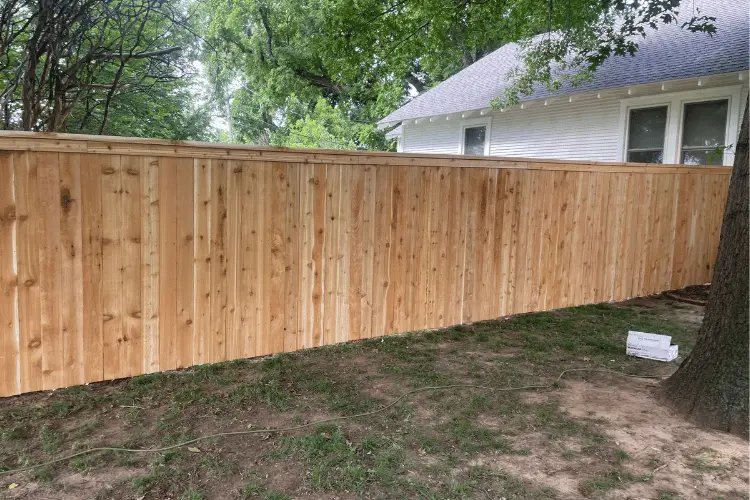
Cedar wood privacy is mid-range and the most popular fence in the metro, offering the best balance of privacy, looks, and value; cap and trim, taller height, and optional steel posts move it up.
Vinyl / PVC lands close to a good cedar fence up front, with very low long-term maintenance.
Farm and ranch fencing spans a wide range, from economical barbed wire on the low end to steel or cedar ranch rail on the higher end, depending on style.
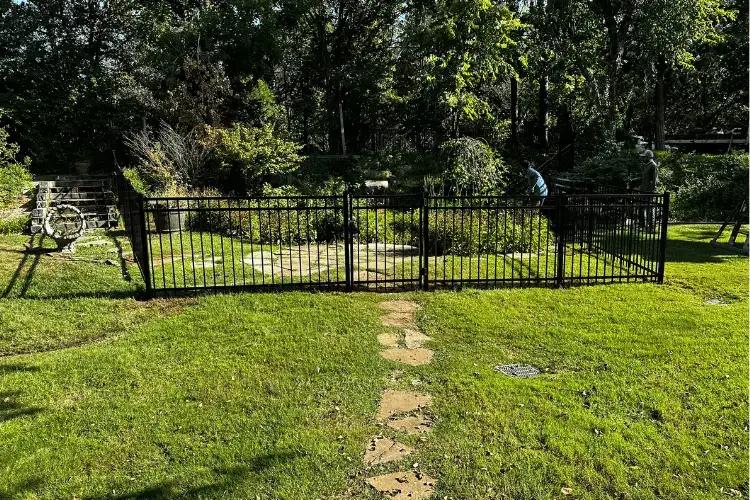
Ornamental and wrought iron is the premium option, reflecting welded, custom, long-lasting construction and the highest curb appeal.
Which Fence Gives the Best Value?
For most Oklahoma homeowners, cedar wood privacy offers the best balance of privacy, appearance, durability, and cost, which is why it is the most popular fence in the metro. Chain link is the value leader when budget is the priority, and ornamental or wrought iron is the premium choice that lasts for generations and lifts curb appeal.
Cheaper is not always less expensive over time. A properly built fence with posts set in concrete and quality materials outlasts a bargain install that racks or leans after the first big storm.
How Fence Height Changes the Price
After material, height is the biggest cost lever. A four-foot fence uses less material and shorter posts than a six-foot fence, and a six-foot fence costs less than an eight-foot privacy fence, which needs taller posts set deeper, more pickets, and often an extra horizontal rail for strength.
On a privacy fence, the jump from six to eight feet is the most common upgrade in the metro, because it adds real privacy where neighbors sit higher or closer. It costs more, but it is usually cheaper to build it tall once than to add height later, so it is worth deciding the height up front.
Do Gates Add Much to the Cost?
Gates are one of the priciest components per unit because each one is a small structure: its own posts, frame, hardware, and labor. A simple walk gate adds modestly, a wide double drive gate adds more, and a heavy cantilever slide gate for a commercial entrance is a larger line item on its own.
How many gates you need, and what kind, noticeably affects the total, which is why we itemize them separately in a quote. It is worth thinking through where you actually need access, and how wide, so the gates match how you use the yard without paying for more than you need.
Does Removing an Old Fence Add to the Cost?
If an old fence has to come out first, tear-out and haul-off add to the job in both labor and disposal. Removing an existing fence, especially one set in concrete, takes real work, and the old material has to be hauled away, so a replacement typically costs more than fencing an open yard with nothing to remove.
This is one reason two seemingly similar yards can quote differently: one is a fresh install and the other is a replacement. We account for tear-out in the estimate so there are no surprises, and it is worth mentioning up front if you have an existing fence that needs to go.
How Terrain and Property Affect the Number
Beyond material, height, and gates, the property itself moves the price. A long straight run on flat ground is the most efficient to build; lots of corners, slopes that make the fence step down, rocky or hard soil, and tie-ins to the house or existing columns all add posts and labor per foot.
Oklahoma also adds wind and code to the equation. Building a fence that survives our wind means placing posts to the proper depth wet set in concrete (mixed on site with water and poured into post holes), and some cities and HOAs have height, setback, or material rules. Those are not upsells, they are what keeps the fence standing and legal, and we handle the permit and HOA paperwork as part of the job.
Is a Cheaper Fence Worth It?
It is tempting to chase the lowest bid, but with fencing the cheapest option is often the most expensive over time. A rock-bottom price usually comes from somewhere, thinner materials, shallow posts, or skipped concrete, and it shows up when the fence leans, sags, or fails after the first big Oklahoma storm.
The better measure is value: a well-built fence in the right material lasts for years and holds up, while a bargain install can cost more in repairs and early replacement. When you compare quotes, look at what each includes, materials, post depth, concrete, tear-out, so you are comparing like for like rather than just the bottom-line number.
How to Budget for a New Fence
A practical way to budget is to start with the job the fence has to do, then choose the material that fits, and only then dial in height, gates, and style. Deciding privacy versus security versus containment up front points you to the right material band, chain link, wood, or iron, and keeps you from over- or under-building.
From there, the biggest swings are height and gates, so settle those early, and factor in tear-out if you are replacing an existing fence. If the total is more than you want to pay at once, financing lets you spread it out, so you can build the fence you actually want rather than the one that barely fits this month’s budget. The goal is a fence that lasts, which is almost always the better long-term value than the cheapest possible build.
How to Get an Exact Fence Quote
We come to your property anywhere in the OKC metro, measure the job, walk through your material and gate options, and give you a free, written, no-obligation estimate. No pressure and no surprises. Most residential fences are completed in one to three days, and every install carries a one-year workmanship warranty.
Call us at (405) 767-4828 or request a free quote to get your exact number.
Financing Your Fence
If you would rather spread the cost over time, we partner with Tinker Federal Credit Union so you can finance your fence, with approval in as little as five minutes for existing members. See our financing page for the simple application steps.
Good to Know
Frequently Asked Questions
It depends mostly on the material, height, total footage, terrain, number of gates, and whether an old fence must be removed. Chain link is the most affordable, cedar wood privacy is mid-range and the best all-around value, and ornamental iron is the premium end. Because every yard differs, we give free, written on-site estimates for an exact number.
Chain link is the most budget-friendly fence, which is why it is the go-to when cost is the priority. Basic galvanized is cheapest; vinyl coating, taller heights, and heavier commercial gauges cost more. Among privacy fences, treated pine is the economical wood option, with cedar the mid-range best-value choice.
Yes. Tearing out and hauling off an existing fence adds labor and disposal to the job, especially for posts set in concrete, so a replacement typically costs more than fencing an open yard. We account for tear-out in the estimate, so it is worth mentioning any existing fence up front for an accurate quote.
Yes. We partner with Tinker Federal Credit Union so you can finance your fence and spread the cost over time, with approval in as little as five minutes for existing members. See our financing page for the simple application steps, and ask about it during your free estimate.
Keep Reading
Explore Our Fence Services