Published · By Frank DeLozier, Owner & Master Fence Builder
Fence lifespan depends on the material, but how it is built and maintained matters just as much in Oklahoma.
How long a fence lasts depends mostly on the material: a cedar wood fence commonly lasts 15 to 30 years, chain link 20 years or more, and ornamental or wrought iron 50 years or longer with care. Vinyl and powder coated galvanized steel also last for decades. In Oklahoma, how a fence is built and maintained matters as much as the material.
Fence Lifespan by Material
Material is the biggest factor in how long a fence lasts, and the common ranges are a useful starting point. Cedar wood privacy fence typically lasts 15 to 30 years, chain link 20 years or more, vinyl 20 to 30 years, powder coated galvanized steel decades with little upkeep, and wrought or ornamental iron 50 years or longer.
Farm and ranch fencing varies widely by type, from barbed wire to pipe. These are general ranges, not guarantees; a well-built, maintained fence reaches the top of its range or beyond, while a poorly built or neglected one falls short. The rest of this guide explains what moves a fence within, or past, those ranges.
How Long Does a Wood Fence Last?
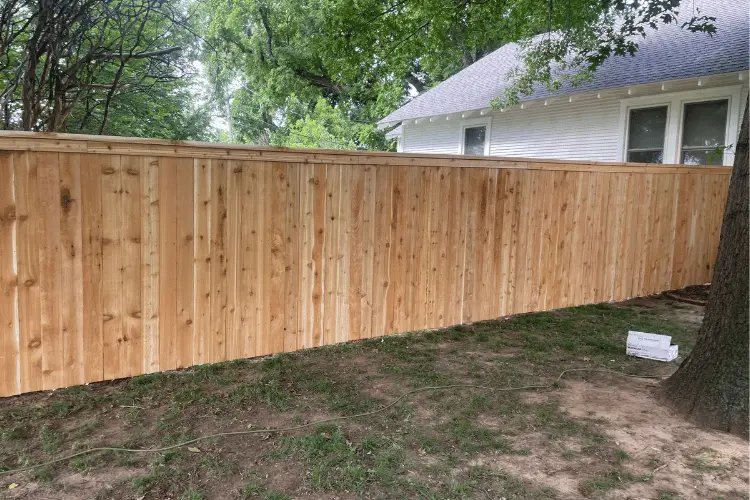
A wood fence’s life depends heavily on the species and the care. Western Red Cedar, the most popular privacy-fence wood in the metro, commonly lasts 15 to 30 years because its natural oils resist rot and insects. Cheaper pine, even pressure-treated, generally does not last as long and is more prone to warping.
Maintenance makes a big difference within that range: a cedar fence that is kept sealed, cleaned, and off the wet ground can reach or exceed the high end, while a neglected one grays, cracks, and rots sooner. And as with any wood fence, the posts usually give out before the pickets do.
How Long Does Chain Link Last?
Chain link is one of the longest-lasting fences for the money, commonly 20 years or more, and often much longer. Galvanized fabric resists corrosion for decades, and vinyl-coated chain link can last even longer because the coating adds another layer of protection.
Part of its longevity is that it asks for almost no maintenance and its open design shrugs off the wind and falling limbs that batter solid fences. Set on posts in concrete and kept reasonably clear of vegetation, a chain link fence is close to install-and-forget.
How Long Does Iron and Steel Fence Last?
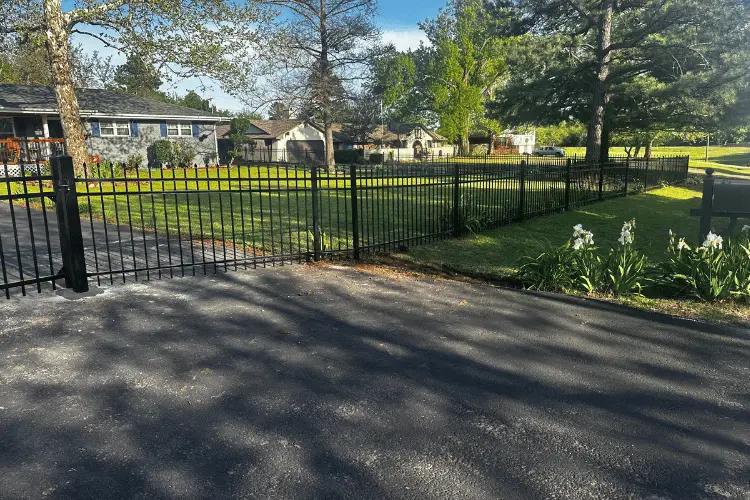
Metal fences are the longevity champions. Ornamental and wrought iron, when properly finished and kept from rust, commonly last 50 years or more, often outliving the homeowner who installed it. That durability is a big part of why iron is the premium fence.
powder coated galvanized steel lasts for decades with essentially very little rust concern, since powder coated galvanized steel resists rust, and its powder-coated finish holds up well in the Oklahoma sun. Between the two, iron offers the most strength and custom potential and powder coated galvanized steel the least maintenance, but both far outlast a typical wood fence.
How Long Does Vinyl Fence Last?
Vinyl fencing commonly lasts 20 to 30 years, with quality being the swing factor. Good, thick vinyl handles the sun and temperature swings well and needs no staining or sealing, just an occasional rinse, which is its main selling point.
Cheaper, thinner vinyl can grow brittle and crack in extreme cold or fade under relentless sun, shortening its life. As with every material, the grade you start with and the quality of the install shape how long it lasts.
What Makes a Fence Last Longer?
Three things determine a fence’s real lifespan: the material, the build, and the maintenance. Material sets the range, but the build and upkeep decide where in that range, or beyond it, a fence lands. A cheap material built and maintained well can outlast a premium material installed poorly.
The build factors that matter most are posts set deep in concrete with good drainage, correct spacing for the wind, and quality fasteners and materials. Get those right and the fence starts with every advantage; skip them and it starts on the clock.
Why Posts Are Usually the First to Go
On most fences, especially wood, the posts fail before anything else. They are buried in damp ground, so wood posts rot at the ground line, and they take the full leverage of the wind, so a shallow or poorly set post loosens and leans over time. When a post goes, that section of fence goes with it.
That is why the posts are where longevity is won. Setting them deep in concrete over gravel for drainage, or upgrading to galvanized steel posts that do not rot at grade, directly extends the life of the whole fence, often by years.
How Oklahoma Weather Shortens Fence Life
Oklahoma is harder on fences than a mild climate, which pushes lifespans toward the lower end of the general ranges unless the fence is built and maintained for the conditions. Intense sun dries and fades wood, high winds and storms stress posts and gates, and humidity plus water-holding clay soil feed rot.
This is exactly why, in Oklahoma, how a fence is built matters as much as the material. A fence engineered for wind and moisture, deep concrete-set posts, good drainage, quality materials, resists the forces that cut a generic fence’s life short.
Maintenance That Extends Fence Life
Whatever the material, upkeep adds years. For wood, that means sealing or staining every few years, cleaning off dirt and mildew, keeping the base clear of soil and vegetation, and fixing small problems early. For metal, it is touching up any finish chips before rust spreads; for chain link, keeping ties tight and vegetation out.
Our Oklahoma fence maintenance checklist covers the seasonal routine. The payoff is real: a maintained fence commonly lasts substantially longer than an identical neglected one, often the difference between the low and high ends of its range.
Repair vs. Replace Near End of Life
Every fence eventually reaches the point where repairs stop making sense. A few pickets or one post on a fence with years left is a clear repair. But when posts are failing across the fence, the wood is widely rotted or gray and brittle, and repairs are stacking up, the fence is near its end.
At that point, continuing to patch it costs more over time than a replacement and only delays the inevitable. We give an honest read on where a fence is in its life and whether your money is better spent repairing or replacing.
Fence Lifespan and Home Value
A fence’s remaining life factors into more than just when you will replace it. When selling, buyers and inspectors notice the condition of a fence: one with years of life left reads as an asset, while a fence near its end reads as a looming expense. A newer, well-built fence supports the home’s value and shows better in listing photos and walkthroughs.
It also drives the repair-or-replace math: putting money into a fence with little life left rarely pays off before a sale, while a sound fence is worth maintaining. Knowing roughly where your fence sits in its lifespan helps you make smart decisions about upkeep, replacement, and timing.
How We Build Fences to Last
We build every fence for the long end of its lifespan: posts placed to the proper depth, wet set in concrete over gravel, correct spacing for Oklahoma wind, quality cedar and materials, and galvanized steel posts available for the lots that need them. The goal is a fence that reaches or beats its material’s range.
A fence is a long-term investment, and the way it is built on day one decides how many years you get out of it. If you want a fence built to last in Oklahoma, that is what we do, and a free on-site estimate is always available.
Get a Free Fence Quote
We come to your property anywhere in the OKC metro, walk through your material options and their lifespans, and build a fence engineered to last. Every install carries a one-year workmanship warranty.
Call us at (405) 767-4828 or request a free quote to get started.
Good to Know
Frequently Asked Questions
A cedar wood privacy fence commonly lasts 15 to 30 years in Oklahoma, depending on care. Cedar’s natural oils resist rot, so it outlasts cheaper pine. Keeping it sealed, clean, and off wet ground pushes it toward the high end; neglect and Oklahoma sun shorten it.
Ornamental and wrought iron last the longest, commonly 50 years or more when kept from rust, followed by powder coated galvanized steel and chain link at 20-plus years. Wood and vinyl typically last 15 to 30 years. Build quality and maintenance shift every material within its range.
Commonly 15 to 30 years. Cedar resists rot and insects naturally, so it holds up better than pine, but Oklahoma’s sun, wind, and humidity push lifespans toward the lower end unless the fence is well built, posts deep in concrete, and maintained with periodic sealing.
Yes, noticeably. Sealing or staining wood, cleaning off dirt and mildew, keeping the base clear, and fixing small problems early can be the difference between the low and high ends of a fence’s lifespan range. For metal and chain link, minor upkeep prevents rust and slack.
Keep Reading
Explore Our Fence Services