Published · By Frank DeLozier, Owner & Master Fence Builder
A pool fence is a safety barrier first: minimum height, limited gaps, and self-closing, self-latching gates are the core rules.
Pool fences in Oklahoma must meet safety-barrier requirements: generally at least 48 inches tall, with limited gaps between and under the pickets and self-closing, self-latching gates that open away from the pool. The exact rules follow your local building code and the safety standards it adopts, so confirm the specifics with your city.
Why Pool Fences Have Their Own Code
A pool fence is not a regular fence with a nicer view, it is a safety barrier whose job is to keep young children away from the water when no one is watching. Because drowning is a serious risk, pool barriers are governed by safety codes that are stricter and more specific than the rules for an ordinary fence.
These requirements come from widely adopted model building and safety codes that cities across Oklahoma incorporate into their local code. The details can vary by municipality and can change, so treat the standards below as the general framework and confirm the exact requirements with your city’s building department.
Minimum Barrier Height
The most fundamental pool-fence rule is minimum height. A pool barrier generally must be at least 48 inches tall, measured from the outside, so it is not easily climbed by a small child. Many jurisdictions and pool professionals recommend or require taller, and some homeowners choose taller for extra safety.
This is often higher than a decorative front-yard fence would be, which is one reason a pool fence is its own project rather than an afterthought. Confirm the exact minimum your city requires, since it can be 48 inches or more depending on the code adopted.
Gap and Spacing Limits
Beyond height, the code limits gaps so a child cannot squeeze through or under the barrier. Vertical gaps between pickets are commonly limited to about four inches, and the clearance between the bottom of the fence and the ground is limited as well, so there is no easy gap underneath.
For barriers with horizontal members that could act as a ladder, the spacing rules get more specific to prevent climbing. These gap limits are why ornamental metal fences with closely spaced vertical pickets are such a natural fit for pools, and why a widely spaced or climbable fence does not qualify.
Self-Closing, Self-Latching Gates
Gates are the most critical part of a pool barrier, because a propped-open or unlatched gate defeats the whole fence. Pool gates are generally required to be self-closing, they swing shut on their own, and self-latching, they latch automatically when they close, so the barrier is never accidentally left open.
This is non-negotiable in pool code, and it is the feature homeowners most often overlook on a DIY barrier. A pool gate that a child can push open, or that does not latch itself, does not meet the requirement no matter how tall the fence is.
Gate Latch Height and Opening Direction
The details of the gate matter too. Pool-gate latches are generally required to be mounted high enough that a small child cannot reach them, or shielded so they cannot be operated from the outside by a child, and gates typically must open outward, away from the pool.
These rules work together: a gate that swings away from the pool, closes and latches itself, and has an out-of-reach latch is what makes a pool barrier actually protective. Confirm the exact latch-height and swing requirements with your city, as they follow the adopted code.
Ground Clearance and Climbability
A compliant pool barrier controls not just what is between the pickets but what is under and around the fence. The gap at the bottom is limited so a child cannot crawl under, and the design should avoid horizontal rails or nearby objects, like planters or furniture, that a child could use as a foothold to climb over.
This is why the surroundings matter: even a perfect fence can be defeated by a patio chair left against it. Keeping the barrier clear of climbable objects is part of keeping it code-compliant and, more importantly, safe.
Above-Ground Pools and House Walls as Barriers
Codes address more than the classic four-sided fence. For an above-ground pool, the pool’s own elevated wall may count toward the barrier if it meets height requirements, with the ladder or steps secured or removable. And where a house wall forms one side of the barrier, extra protections, like alarms on doors leading to the pool, are commonly required.
These scenarios have their own specific rules, so if your pool setup is anything other than a simple in-ground pool fully enclosed by a fence, it is especially important to confirm the requirements with your building department.
Best Materials for a Pool Fence
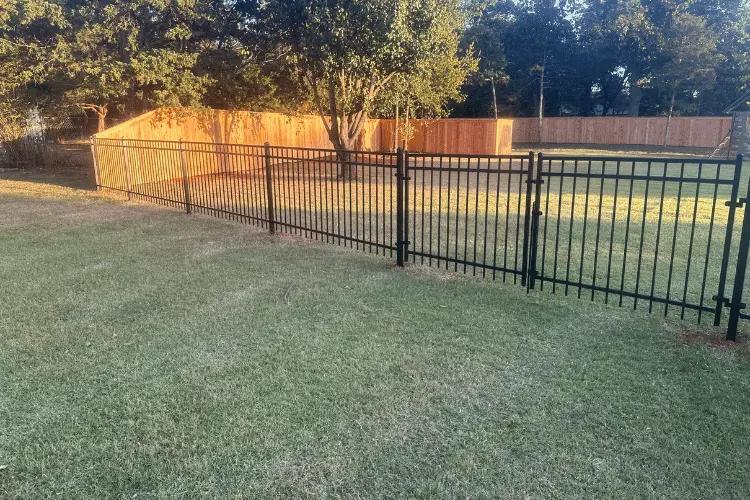
Because pool barriers need closely spaced vertical pickets, a minimum height, and self-latching gates, certain materials are naturals. powder coated galvanized steel is the most popular pool fence by far: it resists rust from splashing or pool chemicals, its slim vertical pickets meet the gap rules, and it looks clean around a pool.
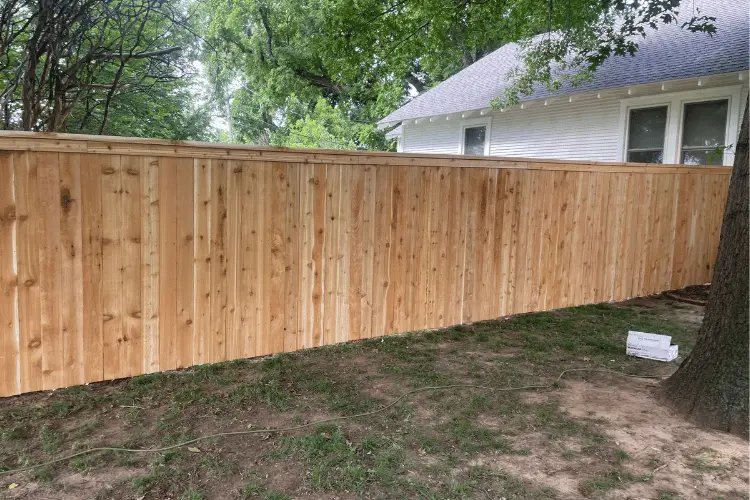
Ornamental iron is another strong, more premium option with the same code-friendly vertical-picket design. Both are built to the required height with self-closing, self-latching gates. A solid wood privacy fence can serve as a pool barrier too if it meets the height, gap, and gate rules.
Why Powder Coated Galvanized Steel Is the Pool Favorite
Powder coated galvanized steel earns its popularity around pools for practical reasons. Pool water and chemistry are hard on materials, and powder coated galvanized steel resists rust, so it stays clean and solid where an untreated metal would corrode. It is also lighter and lower-maintenance than iron while meeting the same barrier requirements.
For most homeowners, powder coated galvanized steel hits the sweet spot of safety, looks, durability, and cost for a pool fence, which is why it is what we most often recommend and install for pool enclosures.
HOA and Code Both Apply
A pool fence has to satisfy the safety code and, if you are in an HOA neighborhood, the HOA’s appearance rules. The good news is these usually align well: the powder coated galvanized steel and iron that meet pool code are exactly the upscale styles HOAs tend to favor.
Still, confirm both. The safety code sets the height, gaps, and gate requirements that cannot be compromised, while the HOA may weigh in on color and style. We build pool fences that satisfy both the barrier code and the neighborhood standard.
Do You Even Need a Pool Fence in Oklahoma?
A common question is whether a pool fence is even required. For residential swimming pools, the answer is generally yes, a safety barrier is required, and it must meet the code standards for height, gaps, and gates. The exact triggers follow your local building code, and the permit for the pool typically comes with barrier requirements attached.
Beyond the legal requirement, a pool fence is strongly recommended for safety regardless of the letter of the code, and many insurers expect or require one to cover a home with a pool. So a pool barrier is rarely optional in practice: it is usually required by code, wise for safety, and often expected by your insurer. Confirm the specific requirement with your city.
How We Build Compliant Pool Fences
We install pool fencing built to meet the barrier requirements that apply to your property, code-height panels with compliant picket spacing and self-closing, self-latching gates, in powder coated galvanized steel and ornamental iron. We help you confirm the specifics with your city so the fence passes and, above all, keeps children safe.
A pool fence is one project where cutting corners is not an option, and we treat it that way. See our pool fence page for more on the service, and a free on-site estimate is always available.
Get a Free Pool Fence Quote
We come to your property anywhere in the OKC metro, review your pool and the applicable barrier requirements, and build a safe, code-compliant pool fence. Every install carries a one-year workmanship warranty.
Call us at (405) 767-4828 or request a free quote to get started.
Good to Know
Frequently Asked Questions
A pool barrier generally must be at least 48 inches tall, measured from the outside, so a small child cannot easily climb it, and some jurisdictions require taller. Exact minimums follow the building code your city adopts, so confirm the specific requirement with your local building department.
Yes. Pool gates are generally required to be self-closing and self-latching, they swing shut and latch automatically, so the barrier is never accidentally left open. The latch must typically be mounted out of a child’s reach, and the gate usually must open outward, away from the pool.
Gaps are limited so a child cannot squeeze through or under. Vertical gaps between pickets are commonly limited to about four inches, and the clearance at the bottom is limited too. Closely spaced vertical pickets, as on powder coated galvanized steel and ornamental iron, are what meet these rules.
powder coated galvanized steel is the most popular because it resists rust from splashing or pool chemicals, its slim vertical pickets meet the gap rules, and it is low-maintenance. Ornamental iron is a premium alternative with the same code-friendly design. Both use self-closing, self-latching gates.
Keep Reading
Explore Our Fence Services