Published · By Frank DeLozier, Owner & Master Fence Builder
Cedar naturally resists rot and insects; treated pine costs less. The right pick depends on your priorities.
Cedar naturally resists rot, decay, and insects and stays straighter over time, making it the premium, longer-lasting wood fence. Treated pine costs less up front and, when properly treated, resists rot too, but is more prone to warping. In Oklahoma, cedar is the popular choice for looks and longevity; treated pine is the budget-friendly option.
The Two Most Common Fence Woods
When you build a wood fence in Oklahoma, the choice usually comes down to cedar or treated pine. Both make good fences, and both are used widely, but they have real differences in how they resist rot and insects, how they hold their shape, how they look, and what they cost. Understanding those differences is how you pick the right one.
There is no universal winner; there is the better wood for your priorities. If longevity and appearance top your list, cedar leans ahead. If up-front cost is the driver, treated pine makes a strong case. This guide compares them across the factors that actually matter for a fence.
Rot and Insect Resistance
This is cedar’s headline advantage. Cedar contains natural oils that make it inherently resistant to rot, decay, and insects, no chemical treatment required. That natural durability is a big part of why cedar is prized for fencing, especially posts and pickets exposed to moisture and Oklahoma’s bugs.
Pine has no natural rot resistance, so fence pine is pressure-treated with preservatives to protect it against rot and insects. Properly treated pine resists rot well, but the protection depends on the treatment, and cut ends and damage can expose untreated wood. Cedar’s resistance is built into the wood itself, which is a meaningful edge over the fence’s life.
Longevity
Because of its natural durability and its tendency to stay straighter, a well-built, maintained cedar fence typically lasts a long time and ages gracefully. Cedar is the choice when you want a wood fence that goes the distance and still looks good years in.
Treated pine can also last a good while when it is properly treated and maintained, but it is generally more prone to warping, twisting, and checking over time, which can shorten its good-looking life even if the wood itself resists rot. In broad terms, cedar tends to outlast pine, particularly in appearance, which factors into the value comparison.
Appearance
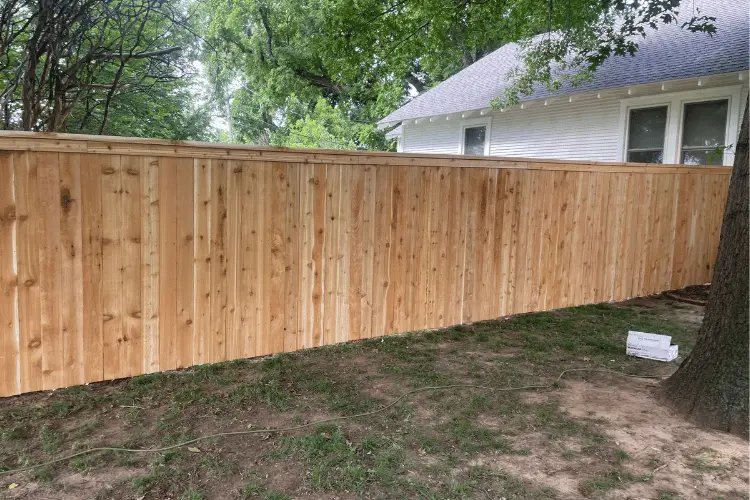
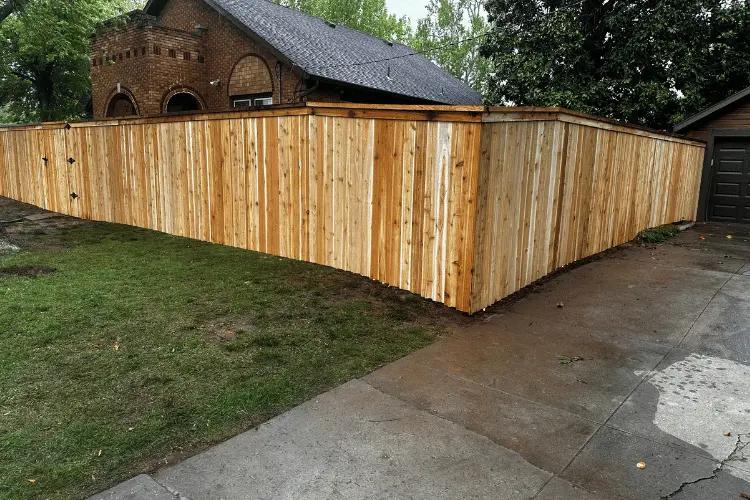
Cedar is widely considered the better-looking fence wood. It has a rich, warm color and attractive grain, and it weathers to a pleasant silvery gray if left unsealed or holds stain beautifully if you choose to finish it. For many homeowners, cedar’s looks alone justify the choice.
Pine is perfectly presentable, especially when stained, but it does not have cedar’s natural richness, and treated pine can have a greenish cast from the treatment initially. If the fence’s appearance is important to you, particularly a front-yard or highly visible fence, cedar has the aesthetic edge.
Warping and Stability
Oklahoma’s swings between wet and dry, hot and cold are hard on wood, and this is where stability matters. Cedar is relatively stable and tends to stay straight, resisting the warping and twisting that plague lesser wood as it repeatedly absorbs and releases moisture.
Pine, especially if not kept sealed, is more prone to warping, cupping, and twisting as it dries and weathers. Warped pickets and rails are a common complaint with pine fences that were not maintained. Cedar’s dimensional stability is a quiet but real advantage for a fence that has to stay looking straight and tidy.
Cost Comparison
Cost is pine’s headline advantage. Treated pine is the more economical wood, both the material typically costs less than cedar, which makes pine the budget-friendly choice for a wood fence, especially over long runs where the per-foot difference adds up.
Cedar costs more up front as a premium wood. Rather than quote figures that would not fit your project, we price your specific fence, but the ranking is consistent: pine is cheaper to buy than cedar. The real question is not just the up-front price but the long-term value, which brings maintenance and lifespan into the picture.
Maintenance for Each
Both woods last longer and look better with maintenance, mainly periodic cleaning and sealing or staining. Cedar can be left to weather to gray or sealed to preserve its color; either way, sealing helps it go the distance. Because cedar resists rot naturally, its maintenance is more about preserving appearance than preventing decay.
Pine benefits even more from staying sealed, because keeping moisture out helps limit the warping and checking it is prone to, and protects any spots where the treatment is thin. Neither wood is maintenance-free, but our guides on staining a fence and fence maintenance apply to both. Consistent upkeep narrows the longevity gap.
Value Over Time
The smartest way to compare cedar and pine is total value, not just sticker price. Pine wins on up-front cost. Cedar often wins on longevity and appearance, potentially lasting longer and looking better with less tendency to warp, which can make it the better value over the life of the fence even though it costs more to install.
Which comes out ahead for you depends on how long you plan to keep the fence, how much appearance matters, and your budget. A homeowner staying put for years who wants a great-looking, long-lasting fence often finds cedar worth it; someone prioritizing lowest up-front cost leans pine. Both are legitimate choices.
Which Should You Choose?
Choose cedar if you want the best looks, natural rot and insect resistance, better dimensional stability, and long-term value, and you are comfortable paying more up front. Cedar is the popular premium choice in Oklahoma for exactly these reasons.
Choose treated pine if up-front cost is your main priority and you are willing to keep it maintained to manage warping. Properly treated and cared-for pine makes a solid, economical fence. We build both and help you weigh the trade-offs for your property and budget.
How Oklahoma’s Climate Affects the Choice
Oklahoma is a demanding place for wood. Summers bake a fence in intense heat and UV, storms and humidity soak it, and the rapid swings between wet and dry, hot and cold drive the constant expansion and contraction that warps and checks lesser wood. Whatever you build here has to weather all of that, which shifts the cedar-versus-pine calculation toward whichever wood holds up better under stress.
Cedar’s natural rot resistance and dimensional stability are genuine advantages in this climate, it tolerates the moisture and the wet-dry cycling with less warping and decay. Treated pine can do well too, but it leans harder on its treatment and on you keeping it sealed, because Oklahoma’s conditions punish any exposed or neglected wood quickly. In a gentler, milder climate the gap between the two woods would matter far less; here in Oklahoma, where the weather works hard against any fence, it is genuinely worth weighing before you decide.
How We Build Wood Fences
Metro Fence builds cedar and treated pine wood fences across the OKC metro, on posts set deep in concrete to handle Oklahoma wind and soil, with the construction details that help any wood fence last. See our privacy fence and residential fence services for the styles we build.
We walk you through cedar versus pine for your specific fence and budget, then build it to last. A free on-site estimate is always available.
Get a Free Wood Fence Quote
We come to your property anywhere in the OKC metro, talk through cedar versus pine and the look you want, and give you a clear quote for each. Every install carries a one-year workmanship warranty.
Call us at (405) 767-4828 or request a free quote to get started.
Good to Know
Frequently Asked Questions
Cedar naturally resists rot, decay, and insects, stays straighter, and looks better, making it the premium, longer-lasting choice. Treated pine costs less up front and resists rot when properly treated but is more prone to warping. Cedar is popular in Oklahoma for looks and longevity; pine is the budget option.
Generally yes, especially in appearance. Cedar’s natural rot resistance and dimensional stability help it last and stay looking good, while treated pine, though rot-resistant when properly treated, is more prone to warping and twisting over time. Both last longer with regular sealing and maintenance.
Often, if you value looks and longevity and plan to keep the fence for years. Cedar costs more up front but can last longer, resist warping, and look better, making it the better long-term value for many homeowners. If lowest up-front cost is the priority, well-maintained treated pine is a solid, economical choice.
Cedar contains natural oils that make it inherently resistant to rot and insects, so it needs no chemical treatment. Pine has no natural resistance, so fence pine is pressure-treated with preservatives to protect it. Cedar’s built-in resistance is a real advantage, since treated pine can be vulnerable at cut ends and damaged spots.
Keep Reading
Explore Our Fence Services