Published · By Frank DeLozier, Owner & Master Fence Builder
A dumpster or equipment enclosure hides the eyesore, secures the contents, and meets HOA or commercial standards.
To hide a dumpster, build a screening enclosure around it, typically three walls and a gate, sized so the container is fully concealed and accessible for pickup. Common materials are chain link with privacy slats, wood, steel or metal panel, and masonry (brick or block), often chosen to match the building. The right enclosure conceals the eyesore, secures the contents, and meets HOA or commercial appearance standards.
Why Dumpsters and Equipment Need Screening
Appearance standards have become the norm in many settings. In residential neighborhoods, homeowners associations often require dumpsters, trash bins, and mechanical equipment to be hidden from view, and in commercial and industrial complexes it is commonly written into the bylaws or required by the city. A dumpster sitting in the open is increasingly not acceptable.
These standards usually address dumpsters, but they frequently extend to other equipment, generators, air conditioning and HVAC units, and utility gear, that owners are expected to conceal. In most cases you can no longer simply set a bin behind a flimsy cover; a proper, durable enclosure that both screens and secures is what is called for.
What a Dumpster Enclosure Does
A good enclosure does three jobs at once. It screens the dumpster or equipment from view so the property looks tidy and meets appearance standards. It secures the contents, keeping people out of a dumpster (and out of dangerous mechanical equipment) and discouraging illegal dumping and theft. And it defines a neat, contained spot for the container so the area stays organized.
The best enclosures do all three while complementing the building rather than looking like an afterthought. That combination, concealment, security, and a look that fits the property, is what separates a real enclosure from a bin hidden behind a scrap of fence.
Chain Link Enclosures
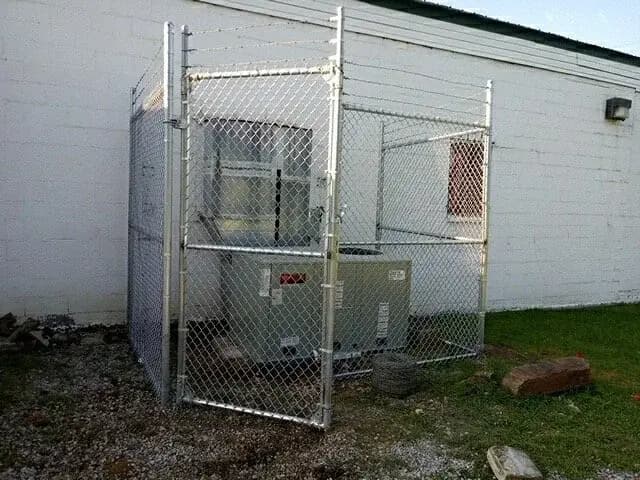
Chain link is the workhorse of enclosures, economical, durable, and quick to install. On its own it is see-through, so for screening it is fitted with privacy slats or windscreen to block the view while keeping chain link’s strength and low cost. It is a common, practical choice for commercial and industrial sites.
For security-focused enclosures around equipment, we often use a heavy 9-gauge chain link fence built tall, around 8 feet, to surround the item, and can add strands of barbed wire on top where extra deterrence is needed. In extreme cases razor wire is an option. Chain link with slats is the go-to when function and budget lead.
Wood Enclosures
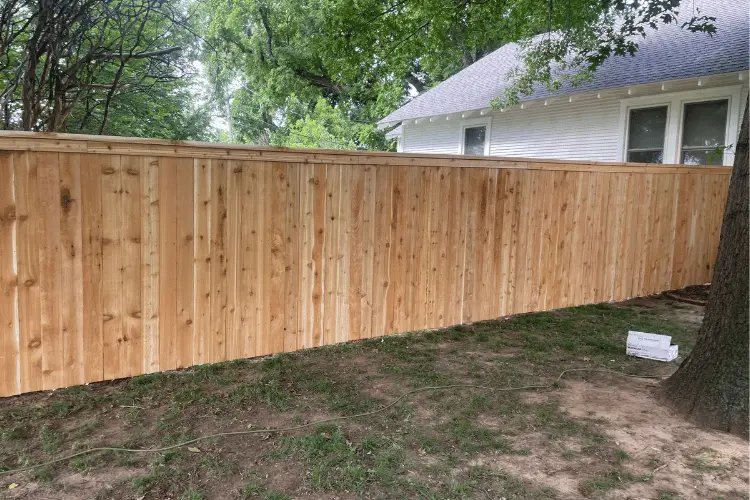
Wood enclosures give a warmer, more residential look and full screening, which suits HOA settings and properties where appearance matters. A wood enclosure can match or complement a wood privacy fence elsewhere on the property, keeping the look consistent, and cedar holds up well to Oklahoma weather.
Wood provides solid concealment and a finished appearance, though like any wood fence it benefits from periodic sealing to last. For neighborhoods and businesses that want the enclosure to blend into a residential or traditional setting rather than read as industrial, wood is a popular choice.
Steel and Metal Panel Enclosures
Steel and metal panel enclosures offer strong, durable, low-maintenance screening with a clean, modern look. Metal panel (corrugated or R-panel) creates a solid, contemporary wall that fully conceals the container and stands up to years of use with little upkeep, and the panel color can be chosen to complement the building.
Metal enclosures suit modern commercial buildings and any site wanting durability and a sleek appearance. They resist the wear that a dumpster area takes, being tougher than wood against impact and needing no staining, which makes them a practical premium option for busy commercial settings.
Masonry (Brick and Block) Enclosures
For the most substantial, permanent look, masonry enclosures in brick or block are hard to beat. They are extremely durable, offer complete screening, and are often the choice, sometimes the requirement, when the enclosure must match a brick or masonry building for a seamless, high-end appearance.
Masonry is the premium end: it costs more and is a permanent structure, but it looks the part and lasts. Many commercial projects use a masonry enclosure with heavy metal gates, combining the solid, building-matching walls with durable, functional access. Where appearance standards are strict and the budget allows, masonry delivers.
Gates Are Part of the Enclosure
An enclosure is only useful if the dumpster can get in and out, so the gate is a critical part of the design. Enclosure gates have to be wide and strong enough for the container to be rolled or lifted out on pickup day and to stand up to heavy, repeated use, dumpster gates take a beating, so they need robust hinges and hardware.
Gates are usually built to match the enclosure walls, chain link, wood, metal, and can be secured with latches or locks to keep the enclosure closed and the contents secure. Getting the gate sizing, swing, and durability right is one of the most important details, since a flimsy or poorly placed gate is the first thing to fail on an enclosure.
Meeting HOA and Commercial Standards
The reason most enclosures get built is to satisfy a standard, an HOA requirement, a commercial complex’s bylaws, or a city expectation, and increasingly those standards require the enclosure to complement the building rather than just hide the bin. Engineers, landlords, and HOAs often specify similar or matching materials.
That means the enclosure design should start with the applicable standard: what materials, height, and appearance are required, and where it must go. Requirements vary by property and jurisdiction, so it is worth confirming the specifics with your HOA, property manager, or the city before building, since it is far cheaper to build to the standard once than to rework an enclosure that does not pass. We build to meet those standards so the enclosure passes review and looks right.
Sizing and Placing the Enclosure
A dumpster enclosure has to be sized around the container and the pickup process. It needs enough room for the dumpster itself plus clearance for the hauler to service it, and it is typically built as three walls with a gated front so the container is screened on the visible sides and accessible from the approach.
Placement matters too: the enclosure has to sit where the truck can reach it, on a surface that handles the weight and traffic, and where it meets any setback or location rules. Getting the size and placement right up front avoids an enclosure that is too tight to service or in the wrong spot, which is exactly the kind of detail we sort out before building so it works on day one and for years after.
How We Build Custom Enclosures
Metro Fence builds custom dumpster and equipment enclosures across the OKC metro in a wide range of materials, chain link with slats, wood, steel and metal panel, and masonry, with durable gates sized for service, all set on posts and footings built for heavy use. With years of experience across these materials, we customize each enclosure to meet the standards set by engineers, landlords, or your HOA.
We handle both residential HOA enclosures and commercial and industrial screening, matching the enclosure to your building and requirements. See our commercial fence and commercial chain link services for related work. A free on-site assessment and quote are always available.
Get a Free Enclosure Quote
We come to your property anywhere in the OKC metro, look at the site and the standards you need to meet, and design an enclosure that conceals, secures, and fits your building. Every install carries a one-year workmanship warranty.
Call us at (405) 767-4828 or request a free quote to get started.
Good to Know
Frequently Asked Questions
Build a screening enclosure around it, typically three walls and a gate, sized so the dumpster is fully concealed on the visible sides and still accessible for pickup. Common materials are chain link with privacy slats, wood, steel or metal panel, and masonry, often chosen to match the building and meet HOA or commercial standards.
It depends on the setting and standard. Chain link with slats is economical and durable for commercial sites; wood suits HOA and residential settings and matches a wood fence; steel or metal panel gives a modern, low-maintenance look; and masonry (brick or block) is the premium, permanent choice that matches a masonry building.
Often, yes. Many HOAs require trash bins, dumpsters, and mechanical equipment to be screened from view, and commercial complexes commonly require it in their bylaws, increasingly specifying that the enclosure complement the building. Requirements vary, so confirm the specifics with your HOA, property manager, or city before building.
Yes. The same enclosure approach that hides a dumpster works for mechanical equipment like AC and HVAC units, generators, and utility gear, screening it from view and securing it against tampering or theft. For equipment, security-focused options like tall heavy-gauge chain link, sometimes with barbed wire, are common.
Keep Reading
Explore Our Fence Services