Published · By Frank DeLozier, Owner & Master Fence Builder
A wind-resistant fence is mostly about the build, deeper posts, tighter spacing, and steel, not just the material.
A wind-resistant fence in Oklahoma comes down to the build, not just the material: set posts deeper in concrete, space them closer together, use galvanized steel posts on exposed lots, and consider a shadowbox or spaced-picket style, or a small gap under the fence, to let wind pass through. Strong gates and bracing matter too.
Why Wind Is the #1 Enemy of Oklahoma Fences
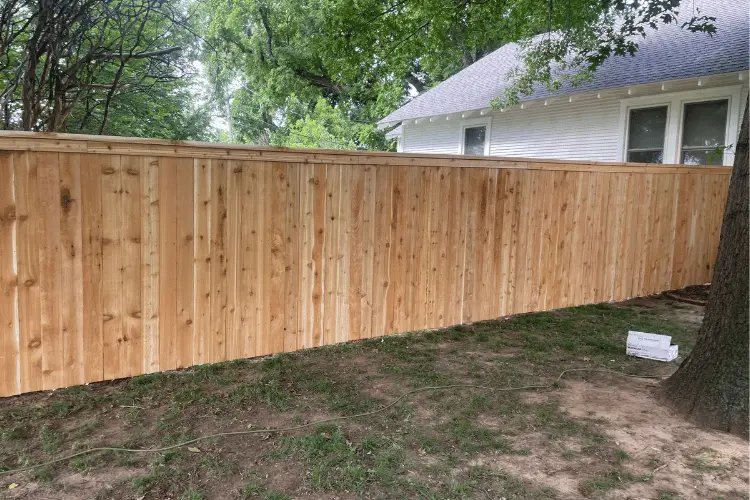
Oklahoma sits in the heart of a region famous for its wind, from everyday gusts to straight-line winds and severe storms. For a fence, that wind is the number-one threat, and a solid privacy fence is the most vulnerable because it acts like a giant sail, catching the full force and transferring it to the posts.
When a fence blows down or leans in Oklahoma, wind is almost always the cause, and the failure almost always traces back to the build, posts too shallow, spaced too far apart, or not set in concrete. The encouraging flip side is that a fence built for wind can stand through storms that flatten a poorly built one next door.
Set Posts Deeper and in Concrete
Wind resistance starts underground. The deeper a post is set, the more leverage it has to resist being pushed over, which is why we set posts to the proper depth, and deeper for tall fence and gates, in concrete. The concrete collar locks the post against the constant push of wind.
This is the foundation, literally, of a wind-resistant fence. A post set shallow or in tamped dirt simply cannot hold a tall fence against Oklahoma gusts. Our guide on how deep fence posts should go covers the depth details, but the short version is: deeper and in concrete is what stands up to wind.
Space Posts Closer Together
How far apart the posts sit is the next big lever. The more fence there is between each post, the more sail area that post has to support and the more leverage the wind gets on it. Tightening the spacing, toward 6 feet on tall privacy fence rather than 8, spreads the load across more posts.
It costs a little more in posts and concrete, but on an exposed lot it is one of the most effective and affordable ways to make a fence stronger. Our post-spacing guide goes deeper, but in wind country, closer is stronger.
Use Galvanized Steel Posts
Wood posts can snap at the ground line in extreme wind or weaken there from rot, and a weakened post is where a fence fails. Galvanized metal posts solve both problems: they are stronger than wood, they flex without snapping, and they do not rot at grade.
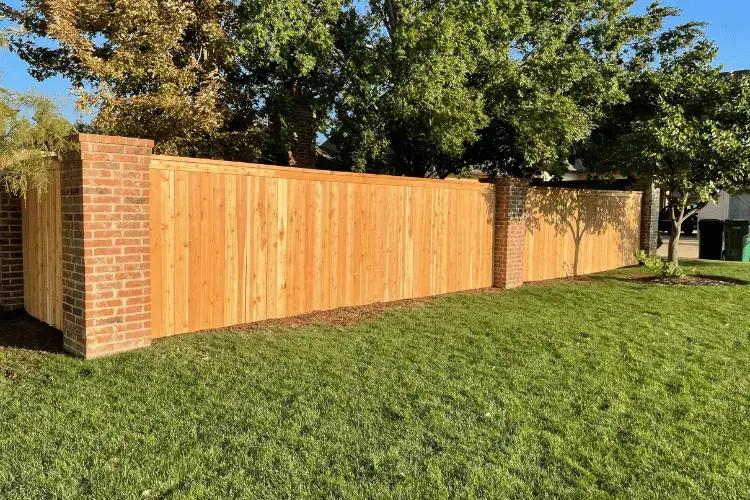
Setting a wood or cedar fence on galvanized metal posts is one of the biggest things you can do for a fence on an exposed Oklahoma lot. You keep the look of a wood fence with a backbone that shrugs off wind far better, which is why every wood fence we install goes up on metal posts.
Let the Wind Through: Shadowbox and Spaced Styles
One of the smartest ways to fight wind is to stop fighting all of it. A completely solid fence catches every bit of the wind; a fence that lets some air pass through takes far less force. That is where semi-private styles come in.
A shadowbox fence alternates pickets on either side of the rail, so it looks solid from an angle but lets air pass straight through. Spaced-picket and lattice-topped designs do the same. You give up a little full privacy, but you gain a fence that a big gust flows through instead of pushing over, a worthwhile trade on the windiest lots.
Consider a Gap Under the Fence
A small detail with a real effect is leaving a modest gap between the bottom of the fence and the ground, a few inches, rather than sealing it tight to the dirt. That gap lets wind pass underneath instead of building pressure against a solid wall, reducing the uplift and push on the fence.
It also helps with drainage and keeps the pickets up out of the wet soil, which fights rot at the same time. Between wind relief and rot prevention, a bottom gap is a simple building choice that helps a fence in two ways at once.
Which Fence Types Handle Wind Best?
Material matters alongside the build. Open fences, chain link and ornamental iron, handle wind best because they barely catch it; the air flows right through the mesh or between the pickets. Solid privacy fences catch the most and need the strongest build to compensate.
Modern metal-panel fence, framed correctly in a steel structure, also stands up well. If you want full privacy on a very exposed lot, the answer is not to avoid a solid fence but to build it right, deep steel posts, tight spacing, and strong bracing, or to choose a wind-passing style.
Whatever the material, the principle is the same: reduce how much wind the fence catches, through open designs or wind-passing styles, and strengthen how well it resists what it does catch, through deep posts, tight spacing, steel, and bracing. Get both right and even a solid privacy fence can weather Oklahoma’s worst.
Reinforce Gates and Corners
Gates and corners are the weak points in a windstorm. A gate is a moving section hung on hinges, so wind can whip it, tear it off, or work it loose; corners and ends anchor the fence and take concentrated stress. Both need extra attention on a wind-resistant fence.
We set gate and corner posts deeper and in more concrete, brace gates well, and add drop rods or cane bolts on wide and double gates so they are pinned against the wind rather than flapping. Keeping gates latched in high wind matters too, an unlatched gate catching a gust is a common casualty.
Maintain It So It Stays Strong
A fence built for wind stays wind-resistant only if it is kept up. A loose board, a slightly leaning post, or a sagging gate is a weak spot that the next storm can exploit, turning a small issue into a blow-down.
Inspect the fence each spring after storm season, tighten and fix small problems promptly, and keep the posts and gates solid. Our Oklahoma fence maintenance checklist walks through the seasonal routine that keeps a fence strong year after year.
Repairing and Rebuilding After Wind Damage
If wind has already damaged your fence, a repair is a chance to build back stronger than before, with deeper posts, tighter spacing, or a steel-post upgrade so the same section does not fail again. Our guide on storm-damaged fences covers the safety, insurance, and repair steps.
There is no reason to rebuild a fence to the same standard that just failed. In a state with Oklahoma’s weather, every repair and rebuild is an opportunity to make the fence more likely to survive the next storm.
How We Build for Oklahoma Wind
Everything we do is shaped by the fact that we build in wind country. Posts go deep and in concrete, spacing is tightened on tall and exposed fence, steel posts are there for the sites that need them, and gates and corners are reinforced. We build the fence for the weather it actually has to face.
It is why our fences stand up where a generic install leans. If you want a fence built to handle Oklahoma wind, that is exactly what we do, and a free on-site estimate is always available.
Get a Wind-Ready Fence Quote
We come to your property anywhere in the OKC metro, assess your wind exposure, and build a fence, or repair an existing one, to stand up to Oklahoma weather. Every install carries a one-year workmanship warranty.
Call us at (405) 767-4828 or request a free quote to get started.
Good to Know
Frequently Asked Questions
Set posts deeper and in concrete, space them closer together, and use galvanized steel posts on exposed lots. A shadowbox or spaced-picket style, or a small gap under the fence, lets wind pass through instead of pushing against a solid wall. Reinforce gates and corners too.
Open fences like chain link and ornamental iron handle wind best because air flows through them. Solid privacy fences catch the most wind and need the strongest build, deep steel posts, tight spacing, bracing, or a wind-passing shadowbox style, to stand up to it.
A small gap of a few inches under the fence lets wind pass underneath instead of building pressure against a solid wall, which reduces the force on the fence. It also improves drainage and keeps the pickets out of wet soil, helping prevent rot at the same time.
Almost always because the build could not handle the wind: posts set too shallow, spaced too far apart, or not set in concrete, so a solid fence acting as a sail levers them over. A fence built with deep, closely spaced, concrete-set posts stands up to the same storms.
Keep Reading
Explore Our Fence Services