Published · By Frank DeLozier, Owner & Master Fence Builder
Fence cost per foot in Oklahoma depends mostly on the material: chain link is the most affordable, cedar wood privacy sits in the middle, and ornamental or wrought iron is the premium end. Height, terrain, gates, and tear-out move your exact number, so the only way to know your real per-foot price is a free on-site quote.
What Does "Cost Per Foot" Actually Mean?
Fence contractors quote in dollars per linear foot because it is the fairest way to price a job that varies in length. A linear foot is simply one foot measured along the ground where the fence runs, so once you know your footage and the per-foot rate we quote, you can estimate the fence portion of the job by multiplying the two, then add gates and any extras.
A good per-foot price already bundles the things that make a fence last: the pickets or mesh, the posts and rails, the concrete, the fasteners, tear-out and haul-off of an old fence when needed, and the labor to build it on site. When you compare quotes, make sure they all include those pieces. A cheap per-foot number that leaves out concrete footings or old-fence removal is not really cheaper.
The ranges below are general planning ranges for the Oklahoma City metro. They are not a quote. Your real number depends on your property, and we give free on-site estimates so you get an exact figure for your yard.
How Materials Rank on Cost Per Foot
Rather than dollar figures that shift with every yard and the current price of materials, here is how the common fences rank per foot, from most affordable to premium, so you can plan.
Chain link is the most affordable per foot, fast to install and long-lasting. Basic galvanized is the cheapest; black or green vinyl coating, taller heights, and heavier commercial gauges cost more.
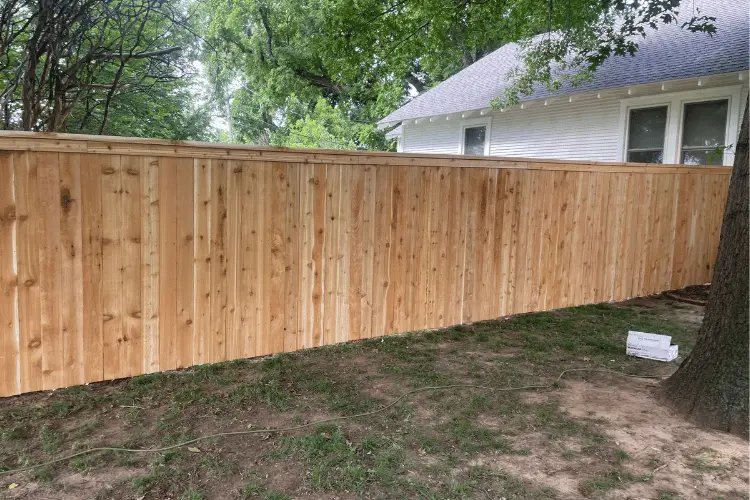
Cedar wood privacy is mid-range and the most popular fence in the metro. Standard six-foot cedar sits at the lower end of wood pricing, while board-on-board, cap-and-trim, eight-foot height, and optional steel posts push toward the top.
Vinyl / PVC sits close to a good cedar fence up front, and never needs staining.
Farm and ranch fencing spans the widest range: barbed wire is the most economical way to fence a long boundary, with woven wire, no-climb horse fence, and steel or cedar ranch rail costing progressively more.
Ornamental and wrought iron is the premium, highest-per-foot option, reflecting welded, custom, generations-long construction and the highest curb appeal.
What Moves Your Per-Foot Price Up or Down?
Six things drive the number more than anything else. Material is the biggest lever, followed by height, the total footage, the terrain and soil, the number of gates, and whether an old fence has to be torn out and hauled off first.
Corners, ends, and elevation changes matter too. A long straight run is more efficient to build than a yard with lots of corners, steps down a slope, or tie-ins to a house and existing columns, all of which add posts and labor per foot.
Oklahoma adds wind and code. Building a fence that survives Oklahoma wind means placing posts to the proper depth wet set in concrete (mixed on site with water and poured into post holes), and some cities and HOAs have height, setback, or material rules. Those are not upsells, they are what keeps the fence standing and legal, and we handle the permit and HOA paperwork as part of the job.
How Fence Height Changes the Price
Height is the second-biggest cost factor after material. A four-foot fence uses less material and shorter posts than a six-foot fence, and a six-foot fence is cheaper per foot than an eight-foot privacy fence, which needs taller posts set deeper, more pickets, and often an extra horizontal rail for strength.
On a privacy fence the jump from six to eight feet is the most common upgrade in the metro, because it adds real privacy on lots where neighbors sit higher or closer. It costs more per foot, but it is usually cheaper to build it tall once than to add height later.
Why Oklahoma Wind Affects Cost (and Saves You Money)
A tall solid fence is basically a sail, and Oklahoma delivers the wind to test it. The parts of the fence you cannot see, the depth of the posts, the amount of concrete, and the quality of the fasteners, are what decide whether it survives the first big storm. Building it right costs a little more per foot up front.
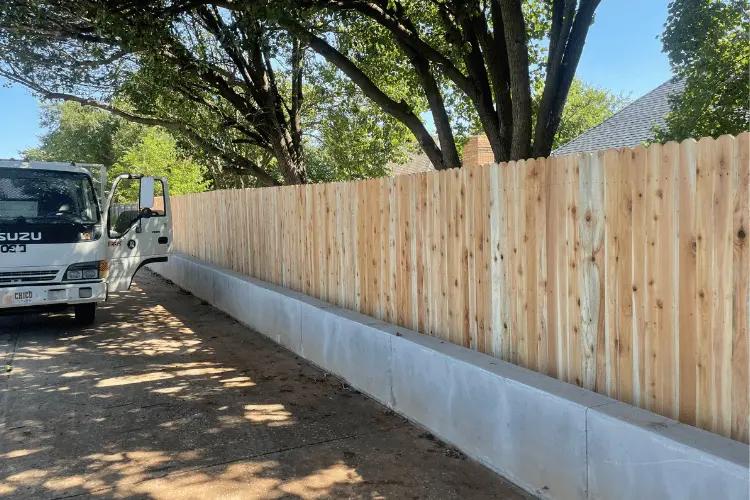
That is money that saves money. A bargain fence that racks, leans, or blows down after a year or two costs far more to repair or replace than a properly built fence did to install. On especially exposed lots we can set wood panels on galvanized steel posts for extra wind resistance and longer life, a small per-foot upgrade that pays off over time.
Estimating Your Total: Footage x Price, Plus Gates
To ballpark a project, measure the perimeter you want to enclose in feet, multiply by a per-foot range for your material, and then add for gates. A standard walk gate and a wider drive or double gate are priced on top of the per-foot fence because they involve extra hardware, bracing, and labor.
For example, once you know your footage, say 180 feet of six-foot cedar privacy, you multiply it by the per-foot rate we quote and add your gates to get the fence total. We give you those real numbers on site, because the price depends on your exact layout, terrain, and gate count, which a quick guess cannot capture.
Does the Time of Year Affect Fence Cost?
Fence pricing shifts a little with the seasons in Oklahoma. Spring is peak season, right after storm season damages fences and homeowners rush to replace them, so schedules fill up and it can be the busiest, most in-demand time to book. Late fall and winter are often easier to schedule, and the ground is usually workable in the metro’s mild winters, so it can be a smart, lower-pressure time to install.
Material prices for cedar, steel, and concrete also move over time with the broader market, which nudges per-foot pricing up or down from year to year. None of this changes the fundamentals, material, height, footage, and gates still drive the number, but if your timeline is flexible, booking in the off-season can sometimes mean a faster start.
Hidden Costs to Watch For in a Fence Quote
The per-foot price is the headline, but a few items live underneath it, and a vague quote can hide them. Tear-out and haul-off of an old fence is real labor and disposal, so make sure it is spelled out if you have an existing fence coming down. Permits and HOA documentation take time and sometimes fees, and rocky or hard clay soil slows down digging, both of which can affect the number.
Corners, ends, and gate posts cost more than line posts because they are bigger and take more concrete and bracing, so a yard with many corners is not the same price per foot as a long straight run. Hard-access backyards, where material has to be carried a long way or through a narrow gate, add labor too. None of these are surprises when a contractor measures in person, which is exactly why an on-site estimate beats a phone guess.
Per-Foot Price vs. Total Project Cost
It helps to think of the per-foot price as a building block, not the whole bill. Your total project is the fence itself (footage times the per-foot rate) plus gates, plus any tear-out, plus permits or HOA work if they apply. Two backyards with the exact same footage can land at different totals because one needs three gates and a tear-out and the other needs one gate on bare ground.
That is why we quote both a per-foot rate and an itemized total. The per-foot number lets you compare materials and contractors on equal footing, and the itemized total tells you what you will actually pay for your specific yard.
How to Compare Fence Quotes the Right Way
When you gather quotes, compare what is inside them, not just the bottom line. Ask each contractor the same questions: what wood grade or fabric gauge, how deep are the posts set and are they in concrete, is tear-out and haul-off included, how many gates and what hardware, and what warranty backs the work. A low number that skips concrete footings, uses thinner materials, or leaves out old-fence removal is not really the low number.
Also confirm the basics that protect you: that the company is licensed and insured, that the estimate is written, and that there is a real workmanship warranty. The cheapest fence often becomes the most expensive one when it racks or leans and has to be rebuilt. Building it right the first time, at a fair per-foot price, is what actually saves money.
Get Your Exact Per-Foot Quote
We come to your property anywhere in the OKC metro, measure the run, walk through your material and gate options, and give you a free, written, no-obligation estimate with a real per-foot and total price. No pressure and no surprises. Most residential fences are finished in one to three days, and every install carries a one-year workmanship warranty.
Call us at (405) 767-4828 or request a free quote to get your number. If you would rather spread the cost, we partner with Tinker Federal Credit Union for fast fence financing.
Good to Know
Frequently Asked Questions
Measure the perimeter of the area you want to enclose in feet; that total is your linear footage. If you are only fencing part of the yard or tying into the house, measure just those runs. We confirm the exact footage during a free on-site measure.
Often, yes. Long straight runs are more efficient to build than short runs with many corners, gates, and elevation changes, so the per-foot cost can come down a little on larger, simpler projects.
Usually gates are priced separately on top of the per-foot fence, because they add hardware, bracing, and labor. Ask any contractor to itemize gates so you are comparing quotes fairly.
Chain link is typically the most affordable fence, and barbed wire is the cheapest option for long rural boundaries. The best all-around value for a private backyard is usually cedar wood privacy. We give you the exact per-foot number for your yard in a free estimate.
Keep Reading
Explore Our Fence Services