Published · By Frank DeLozier, Owner & Master Fence Builder
Chain link is the most affordable fencing option in the OKC metro, which is its main appeal. Basic galvanized is the least expensive; black or green vinyl coating, taller heights, heavier commercial gauges, privacy slats, and gates all add to the price. The only way to know your exact cost is a free on-site quote.
How Much Does Chain Link Fence Cost in OKC?
Chain link is the value leader in the Oklahoma City metro, the most affordable fence most homeowners can buy. That makes it the go-to when budget is the priority, when you need to contain pets or secure a yard, or for light-commercial and utility uses.
We do not put a fixed online price on it because the cost varies with height, gauge, coating, and gates. Chain link is fast to install and lasts 25 years or more, and its open design shrugs off wind and falling limbs. Your exact price depends on your yard, and we give free on-site estimates.
Galvanized vs. Vinyl-Coated: The Cost Difference
Standard galvanized chain link, the familiar silver mesh, is the most economical option and extremely durable. It is the default for utility, pet, and budget-driven projects.
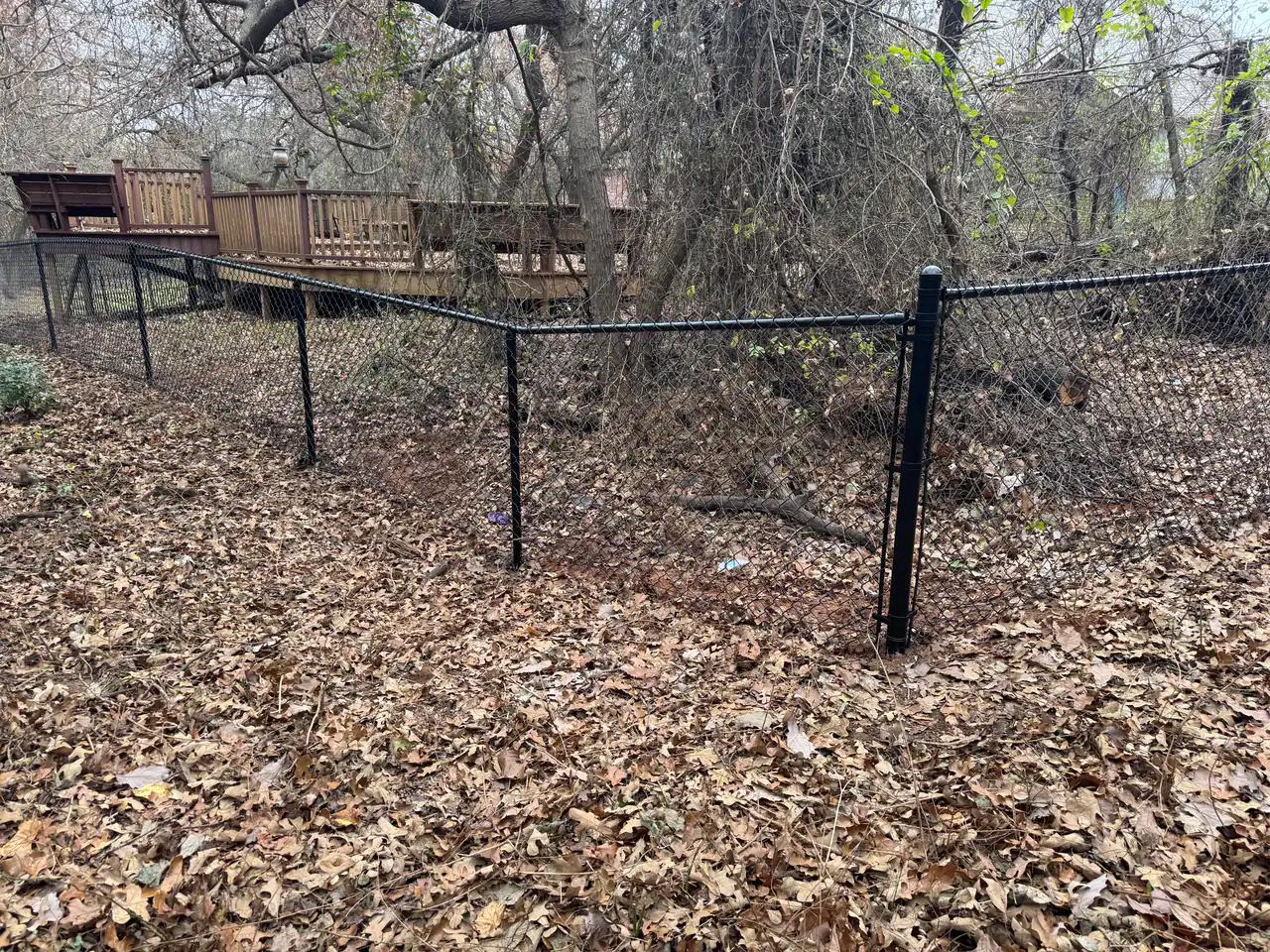
Black or green vinyl-coated chain link costs a bit more per foot, but many homeowners feel it is worth it in a residential backyard. The dark coating recedes visually, blends into landscaping, and looks far cleaner than bright galvanized, while adding an extra layer of corrosion protection. For a backyard people actually look at, vinyl-coated is the popular upgrade.
What Affects Chain Link Cost?
Height is a primary factor, the same as any fence: a four-foot fence uses less material than a six-foot fence, which is cheaper than taller security heights. Gauge matters too. Residential chain link uses lighter fabric, while commercial and industrial jobs call for heavier, lower-gauge mesh and larger posts that cost more.
Coating (galvanized versus vinyl), gates, and site conditions round it out. Rocky or clay soil that is hard to dig, lots of corners and ends, and tear-out of an old fence all add labor. As with any fence in Oklahoma, we set posts in concrete so the run stays tight and plumb through the wind.
Residential vs. Commercial Chain Link Cost
Residential chain link, typically four to six feet in a lighter gauge, is the least expensive fence most homeowners can buy. Commercial and industrial chain link is a different animal: taller heights, heavier fabric and framework, larger line and terminal posts, and often barbed-wire or razor tops and heavy gates for security.
All of that adds cost per foot, but it buys a fence that secures a business, a yard, or equipment to an insurer’s or a code’s requirements. We build both, and we spec the gauge and height to match the job rather than over- or under-building it.
Add-Ons That Change the Price
Chain link is easy to tailor, and each add-on affects the price. Privacy slats woven through the mesh turn an open fence into a screen; windscreen does similar work on sports and commercial fence. A wood-post and top-rail combination dresses up the street side of a residential yard.
Gates are priced on top of the fence. A walk gate is modest, a double drive gate more, and a rolling cantilever slide gate for a commercial entrance more still. Barbed-wire or razor tops add security height on commercial jobs. Tell us what the fence needs to do and we will price the right combination.
Is Chain Link the Cheapest Fence?
For most projects, yes. Chain link is typically the most affordable fence per foot in the metro, beaten only by barbed wire on long rural boundaries. Compared with cedar privacy or ornamental iron, it delivers a durable, functional fence for a fraction of the cost.
The trade-off is privacy and looks: standard chain link is open and utilitarian. If you want the low cost of chain link with more privacy, vinyl-coated mesh with privacy slats or a wood-post combo is a smart middle ground. If privacy is the whole point, a cedar fence may be the better spend.
Wood-Post Chain Link: A Popular Middle Ground
One option worth pricing is a wood-post chain link fence, which pairs the low cost and durability of chain link fabric with wood posts and a wood top rail on the street-facing side. It costs a bit more than an all-steel chain link fence, but far less than a full wood privacy fence, and it dresses up the look considerably for a backyard that faces the road or a neighbor.
Homeowners often choose it when they want chain link’s price and pet containment for the back and side runs but a warmer, more finished look where the fence shows. It is a good example of how chain link flexes to the budget: go bare galvanized for pure function, add vinyl coating for looks, weave in privacy slats for screening, or combine it with wood, each step trading a little more cost for a little more appearance or privacy.
Chain Link for Dogs and Pets
A lot of chain link in the metro goes up for dogs, and a few cost choices are worth knowing. Height should match your dog: many dogs are fine with a four-foot fence, but athletic jumpers and large breeds may need five or six feet, which costs a bit more per foot. If your dog digs, we can help with options like a bottom tension wire, a buried kickrail, or setting the fabric closer to the ground so there is no easy gap to dig under.
Chain link’s open weave lets dogs see out, which some love and some bark at, so vinyl-coated black mesh is a popular pick because it is easy to see through for you and blends into the yard. None of these choices add much to the price, and they make the fence work better for a pet household.
Chain Link Cost by Height
Height is the easiest lever to move chain link cost. A four-foot fence, common for front yards and pet containment, uses the least material and sits at the bottom of the range. A five- or six-foot fence, the usual choice for backyard security and privacy-slat screening, costs more per foot for the taller fabric and posts.
Above six feet you are into security and commercial territory, seven, eight, and ten-foot fence with heavier framework, which costs the most per foot and is priced by the job. If you are not sure how tall you need, we help you match height to purpose during the estimate so you are not paying for more fence than the job calls for.
How Long Does Chain Link Last?
Part of chain link’s value is how long it lasts for the money. A properly installed galvanized chain link fence commonly lasts 25 years or more, and vinyl-coated fabric can last even longer because the coating adds a layer of corrosion protection over the galvanizing. There is almost no maintenance: no staining, no sealing, and its open weave shrugs off wind and the occasional falling limb.
Spread over that lifespan, chain link is one of the lowest cost-per-year fences you can buy. The main thing that shortens its life is a poor install, posts not set in concrete, mesh left loose, so the way it is built matters as much as the material. We set posts in concrete and machine-stretch the fabric tight so it stays that way.
Privacy Slats and Windscreen: Cost and Trade-offs
The most common chain link add-on is privacy. Privacy slats weave vertically through the mesh to turn an open fence into a screen, giving you a good measure of privacy for far less than a solid wood fence, though they add material and labor to the per-foot price. Windscreen, a fabric panel zip-tied to the fence, does similar work on sports courts and commercial sites.
There is a trade-off to know: slats and windscreen turn an open fence into a more solid one, which means it catches more wind. On exposed sites we account for that with proper post spacing and setting so the fence still holds up. If full privacy is the real goal, it is worth comparing a slatted chain link fence against a cedar privacy fence during your estimate.
Get an Exact Chain Link Quote
We come to your property anywhere in the OKC metro, measure the run, and walk through your height, coating, gate, and add-on options, then give you a free, written, no-obligation estimate. Most chain link fences go up fast, and every install carries a one-year workmanship warranty.
Call us at (405) 767-4828 or request a free quote. Financing through Tinker Federal Credit Union is available if you would rather spread the cost.
Good to Know
Frequently Asked Questions
Yes. Chain link is typically the most affordable fence in the OKC metro, while cedar wood privacy costs more. Chain link trades privacy and looks for a much lower price and a long service life, which is why it is the budget choice for pets, security, and utility fencing.
A standard four-foot residential chain link fence sits at the lower end of the range, since it uses less material than taller fence. The exact price depends on length, gauge, coating, and gates, which a free on-site measure pins down.
Yes, a bit. Black or green vinyl-coated chain link costs a little more per foot than bright galvanized, but it looks cleaner in a backyard, blends into landscaping, and adds corrosion protection, which is why it is a popular residential upgrade.
Gates are priced on top of the per-foot fence. A single walk gate is modest, a double drive gate costs more, and a heavy commercial cantilever slide gate costs the most. We itemize gates in every estimate so you can see exactly what they add.
Keep Reading
Explore Our Fence Services