Published · By Frank DeLozier, Owner & Master Fence Builder
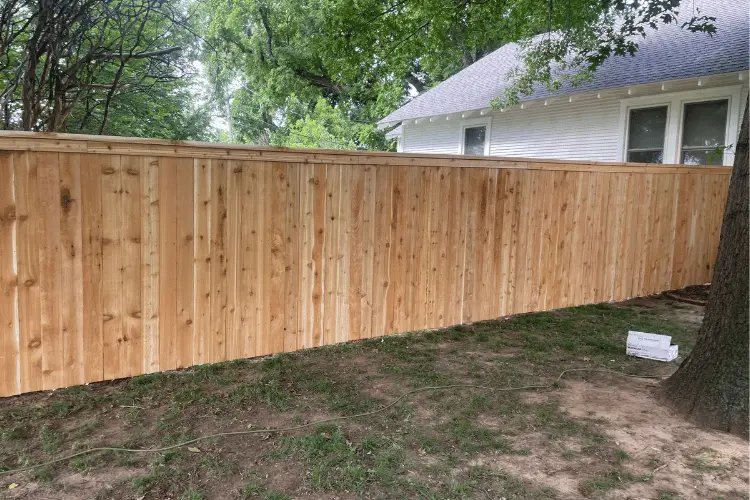
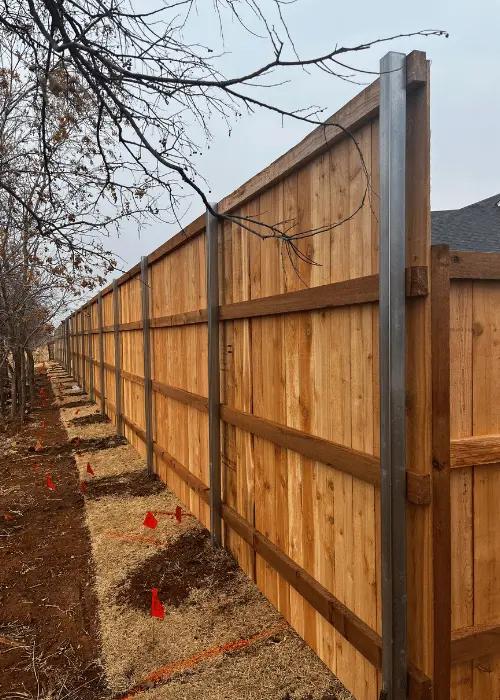
A fence post set in a full concrete collar over a gravel base, the way we build to beat Oklahoma wind.
Most fence posts need about one to two 50- or 60-pound bags of concrete each, depending on the hole size and post width. A standard 4x4 post in a 10- to 12-inch-wide hole dug to the proper depth typically takes roughly two bags. Bigger posts, gate posts, and wider holes need more.
How Much Concrete Per Fence Post? The Quick Answer
For a typical wood fence, plan on about one to two bags of 50- or 60-pound concrete mix per post. A standard 4x4 post set in a 10- to 12-inch-wide hole, dug to the proper depth as we do in Oklahoma, usually lands right around two bags.
Treat that as a planning figure, not a precise rule, because the real amount comes down to your hole size and post width. Larger 6x6 posts, gate posts, and corner posts take more; a small 4-foot fence in a narrow hole takes less. Below is how to estimate it accurately for your job.
It Depends on Hole Size and Post Width
The concrete you need is simply the volume of the hole minus the volume of the post that sits in it. So three things drive the number: how deep the hole is, how wide it is, and how thick the post is. A deeper, wider hole takes more concrete; a thicker post displaces more and takes slightly less.
Because we set posts deep and in generously sized holes for wind resistance, our footings use more concrete than a minimal install. That is intentional, a bigger concrete collar grips the post better against Oklahoma wind, so the extra bag or two is doing real structural work.
Estimating Concrete: The Simple Method
The easiest way to estimate is to use the coverage chart printed on the concrete bag. Every bag lists how many cubic feet it yields, and many list how many post holes of a given size it fills. Figure the volume of your hole, subtract the post, and divide by the bag yield to get bags per post.
If you would rather skip the math, most home-center concrete calculators let you enter your post and hole dimensions and return bags per hole. Then multiply by your total number of posts, and add a bag or two of cushion so you are not short a post at the end of the day.
Concrete Per Post by Fence Type
A standard 4x4 wood privacy post is the baseline at roughly one to two bags. A heavier 6x6 post, common for gates and pergola-style ends, takes more because both the post and the hole are bigger. Chain link line posts are thinner but their terminal posts, at corners, ends, and gates, are set deeper and take more.
Gate posts deserve extra everywhere. Because they carry a swinging load, we set them deeper and wider, which means noticeably more concrete than a line post. Skimping there is a top cause of sagging gates, so the extra concrete is worth it.
Fast-Set vs. Mixed Concrete: Which to Use
Fast-setting concrete is popular for fence posts because you can pour it into the hole dry and add water, no mixing in a wheelbarrow, and it sets in a matter of minutes. For a DIYer setting a run of posts, it is convenient and plenty strong for a residential fence.
Standard concrete mix, mixed to the right consistency, reaches higher ultimate strength and is often preferred for heavy gate posts and commercial work. Either can build a solid fence; the choice is mostly about convenience versus maximum strength for the load. We use the right one for the job.
How Much for Gate and Corner Posts?
Gate and corner posts are the ones to over-build, not skimp. They carry loads that line posts do not, a swinging gate or the pull of a fence line, so we set them deeper and in wider holes, which means more concrete per post, sometimes two to three times a line post’s amount.
It is the cheapest insurance on the whole fence. A little extra concrete around the gate and corner posts is far less than the cost of re-hanging a sagging gate or resetting a leaning corner down the road.
Do You Need Gravel Under the Post?
Yes, a few inches of gravel in the bottom of the hole before you set the post is worth the small effort. It lets water drain away from the base of the post instead of pooling against it, which is exactly where a wood post rots first.
The gravel handles drainage and the concrete handles the load. Together they give a post that resists both rot and wind, which is why we set posts over a gravel base on every job rather than dropping them straight onto bare clay.
How to Pour Concrete for a Fence Post
The method is straightforward: put a few inches of gravel in the hole, set the post, plumb it with a level, and brace it so it cannot move. Then add concrete, dry mix plus water for fast-set, or wet-mixed concrete, filling around the post and working out air pockets.
Finish by sloping the top of the concrete away from the post so rainwater sheds off instead of pooling against the wood. Leave the braces on and let the concrete cure before you hang rails, pickets, or a gate. That slope and that cure time are two small steps that add years to a fence.
How Long Before You Can Build on the Posts?
Fast-set concrete firms up in as little as 20 to 40 minutes, enough to remove the braces, but it keeps gaining strength for a day or more. Standard concrete takes longer to set and reaches full strength over several days.
The practical rule is to let the posts set overnight, or per the bag’s directions, before you hang rails and pickets, and give gate posts extra time before hanging a heavy gate. Rushing this is a common reason a DIY fence ends up slightly out of plumb.
Do You Need Concrete for Every Post?
On a light fence in a calm climate, some builders set only the corner, end, and gate posts in concrete and tamp the line posts in gravel or dirt to save material. It is a real technique, and it can be fine for a low chain link or a garden fence that catches little wind.
In Oklahoma, we do not recommend it for anything that has to stand up to wind, which is most fences here. The line posts carry the fence between the corners, and a tall privacy or even a 6-foot chain link line takes real wind load. Concreting every post is cheap insurance against the leaning that a partial set invites, which is why we set them all.
Common Concrete Mistakes
The usual mistakes are using too little concrete for the hole, skipping the gravel base, forgetting to slope the top so water pools against the post, and building on the posts before the concrete has cured. Each one shortens the life of the fence.
Not bracing the post while the concrete sets is another: without a temporary brace, a post can drift out of plumb before the concrete grabs it, and then it is set crooked for good. A few stakes and braces prevent it.
How We Set Posts in Concrete
On every fence we build, posts go into generously sized holes over a gravel base, set to the proper depth with a full concrete collar sloped to shed water, and braced until the concrete cures. Gate and corner posts get extra depth and concrete.
It is the least visible part of the job and the part that decides whether the fence is still standing plumb in ten years, and it is backed by our one-year workmanship warranty. If you would rather leave the digging and pouring to us, we are glad to give a free on-site estimate.
Get a Fence Quote
We come to your property anywhere in the OKC metro, measure the job, and set your fence on properly poured footings built for Oklahoma soil and wind. Every install carries a one-year workmanship warranty.
Call us at (405) 767-4828 or request a free quote to get started.
Good to Know
Frequently Asked Questions
A standard 4x4 post in a 10- to 12-inch hole dug to the proper depth typically takes about one to two 50- or 60-pound bags. The exact amount depends on your hole size, so check the coverage chart on the bag and add a little cushion.
Not always, but in Oklahoma it is strongly recommended. Concrete gives the most wind-resistant set, which matters in a high-wind state. Tamped gravel or dirt can work for light fence in calm areas, but for a fence that must survive wind, concrete is the reliable choice.
Yes. Fast-setting concrete is convenient because you pour it dry and add water, no mixing, and it sets in minutes and is plenty strong for a residential fence. Standard mixed concrete reaches higher ultimate strength and is often preferred for heavy gate posts.
Fast-set concrete firms up in about 20 to 40 minutes but keeps gaining strength for a day or more. Standard concrete cures over several days. Let posts set overnight before hanging rails and pickets, and give gate posts extra time before hanging a heavy gate.
Keep Reading
Explore Our Fence Services