Published · By Frank DeLozier, Owner & Master Fence Builder
In Oklahoma, wind, not frost, decides how deep a fence post has to go, and deeper posts set in concrete are what keep a fence plumb.
In Oklahoma, fence posts should be placed to the proper depth for the fence and the site, roughly a third of the post’s above-ground height, and wet set in concrete. Depth matters far more for wind here than for frost, since Oklahoma’s frost line is shallow. Properly placed, concrete-set posts are what keep a fence from leaning after the first big storm.
How Deep Should a Fence Post Be? The One-Third Rule
The classic guideline is the one-third rule: about a third of the post’s total length should be in the ground. For a 6-foot-tall fence, that is why an 8-foot post is a common choice, leaving roughly a third of it below grade.
It is a starting point, not a hard limit. Taller fences, heavier gates, sandy or loose soil, and high wind all argue for going deeper. In Oklahoma, we place every post to the proper depth for that fence and that site, going deeper where wind and height call for it.
Why We Set Posts to the Proper Depth in Oklahoma
A fence lives or dies on its posts, and in Oklahoma the enemy is wind. A tall solid fence catches enormous force in a storm, and all of that leverage tries to lever the posts out of the ground or snap them at grade. Depth is the single biggest thing standing in the way.
That is why we place posts to the proper depth wet set in concrete (mixed on site with water and poured into post holes) on residential fence, going deeper for taller privacy fence and gate posts. It is more digging and more concrete than a minimal install, and it is exactly what separates a fence that shrugs off a storm from one that leans the next morning.
Frost Line vs. Wind: What Governs Depth Here?
In cold climates, posts are set below the frost line so that freezing, expanding soil cannot heave them upward over winter. That rule drives post depth across much of the northern United States.
Oklahoma is different. Our frost line is shallow, generally under a foot in the central part of the state, so frost heave is a minor concern compared with places up north. Here, wind is the governing factor, which is why our depths are driven by height and wind exposure rather than by frost.
Does Post Depth Depend on Fence Height?
Yes, directly. The taller the fence, the more sail area it presents to the wind and the more leverage on the post, so a taller fence needs a deeper, more solidly set post to resist it. A short 4-foot fence can get by with less depth than a 6-foot one.
An 8-foot privacy fence is the clearest example: it catches far more wind than a 6-foot fence and needs posts set deeper and often larger, with more concrete, to hold it. Matching depth to height is basic to a fence that stays plumb.
Setting Posts in Oklahoma Clay Soil
Much of the OKC metro sits on expansive clay, soil that swells when wet and shrinks when dry. That movement can grip and heave a poorly set post over the seasons, working it loose even without much wind.
The defenses are depth, drainage, and concrete. A few inches of gravel at the bottom of the hole lets water drain away from the post base, a proper depth gets below most of the seasonal movement, and a full concrete set locks the post in place. Skipping any of these is how clay slowly pushes a fence out of line.
Concrete vs. Gravel vs. Tamped Dirt
There are three common ways to set a post: tamped dirt, gravel, or concrete. Tamped dirt is the weakest and is not suited to a fence that must handle Oklahoma wind. Gravel drains well and some builders prefer it for wood posts, but it offers less lateral resistance on its own.
Concrete gives the most rigid, wind-resistant set, which is why we use it, typically over a gravel base so water still drains away from the post. The gravel handles drainage, the concrete handles the load, and together they give a post that resists both rot and wind.
How Deep for Gate and Corner Posts?
Gate and corner posts carry loads that line posts do not, so they are set deeper and often larger. A gate post supports a swinging weight that constantly tries to pull it out of plumb, and a corner or end post anchors the pull of the fence or the tension of chain link.
Under-setting these posts is a top cause of sagging gates and leaning corners. We give them extra depth, extra concrete, and bracing where needed so gates keep swinging true and corners hold the line for years.
How Deep for Chain Link and Farm Posts?
Chain link line posts do not need to be as deep as tall privacy posts because the fence is open and catches little wind, but the terminal posts, corners, ends, and gates, are set deeper and braced to hold the mesh in tension. Skimp on the terminals and the whole fence goes slack.
Farm and ranch fence follows the same logic on a bigger scale: line posts can be shallower, but the braced corner assemblies that hold wire tension are set deep and built stout, because they are the backbone of the entire run.
What Happens If Posts Are Too Shallow?
Shallow posts are the number-one reason fences fail in Oklahoma. A post that is not deep enough, or not set in concrete, simply does not have the leverage to resist wind, so the fence starts to lean, then racks, and in a strong enough storm sections blow down entirely.
It usually shows up first as a lean after a windy spring, then gets worse each season. The frustrating part is that it is completely preventable; the fix is depth and concrete at install, which costs far less than repairing or rebuilding a fence that was set too shallow.
Post Depth, Drainage, and Avoiding Rot
Depth protects against wind, and drainage protects against rot. A wood post sitting in a hole that collects water will rot at the worst possible spot, right at or below the ground line, where you cannot see it until the fence starts to go.
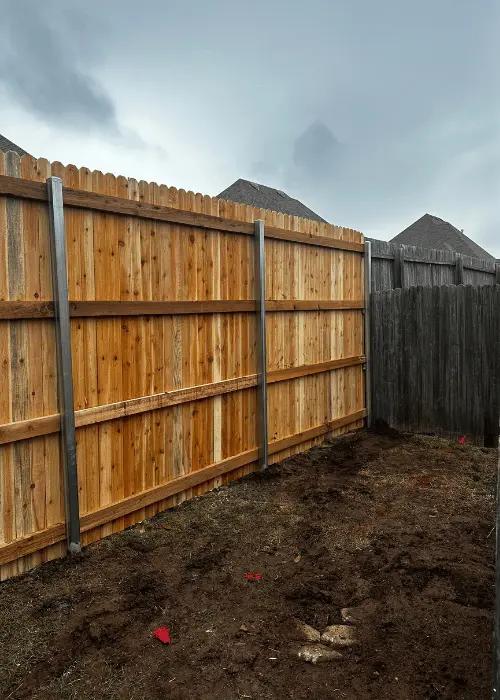
A gravel base under the post, a concrete collar sloped to shed water away from the wood, and keeping the fence off direct contact with soil all help a post last. On the windiest lots, galvanized steel posts sidestep ground-line rot entirely, which is why we offer them as an upgrade.
How Wide Should the Post Hole Be?
Depth gets most of the attention, but hole width matters too. A common guideline is to dig the hole about three times the width of the post, so a standard 4-inch post sits in a hole roughly a foot across. That leaves room for a solid concrete collar around the post rather than a thin shell that can crack.
A wider, properly filled hole spreads the load and grips the post better against wind, while a hole barely bigger than the post leaves too little concrete to do its job. Gate and corner posts, which carry more load, benefit from even more generous holes and concrete. Getting both the depth and the width right is what turns a post and a bag of concrete into a footing that actually holds a fence up in Oklahoma weather.
How We Set Posts to Last
On every fence we build, posts are placed to the proper depth and wet set in concrete over a gravel base, with depth increased for taller fence, gate posts, and exposed lots. It is the least glamorous part of the job and the part that decides whether the fence is still standing in ten years.
That approach, plus correct spacing and quality materials, is backed by our one-year workmanship warranty. If you want a fence set to last through Oklahoma weather, we are glad to give a free on-site estimate.
Get a Fence Quote
We come to your property anywhere in the OKC metro, assess your soil and wind exposure, and set your fence on posts built to stand up to Oklahoma weather. Every install carries a one-year workmanship warranty.
Call us at (405) 767-4828 or request a free quote to get started.
Good to Know
Frequently Asked Questions
For a 6-foot fence, about a third of the post should be in the ground. In Oklahoma we place posts to the proper depth for the fence and the site and wet set them in concrete, leaning deeper where needed, because wind, not frost, is the governing factor.
Frost is a minor concern in Oklahoma because the frost line is shallow, generally under a foot in the central part of the state. Here, post depth is driven by fence height and wind exposure rather than frost, which is why we set posts to the proper depth.
In Oklahoma, yes. Concrete gives the most wind-resistant set, which matters in a high-wind state. We set posts in concrete over a gravel base so water still drains away from the post; the gravel handles drainage and the concrete handles the load.
The most common cause is posts set too shallow or without concrete, so they cannot resist wind and start to lean. Expansive clay soil that swells and shrinks, poor drainage, and rot at the ground line make it worse. Proper depth, concrete, and drainage prevent it.
Keep Reading
Explore Our Fence Services