Published · By Frank DeLozier, Owner & Master Fence Builder
A solid, tall privacy fence is the foundation of a private backyard; toppers and plantings take it further.
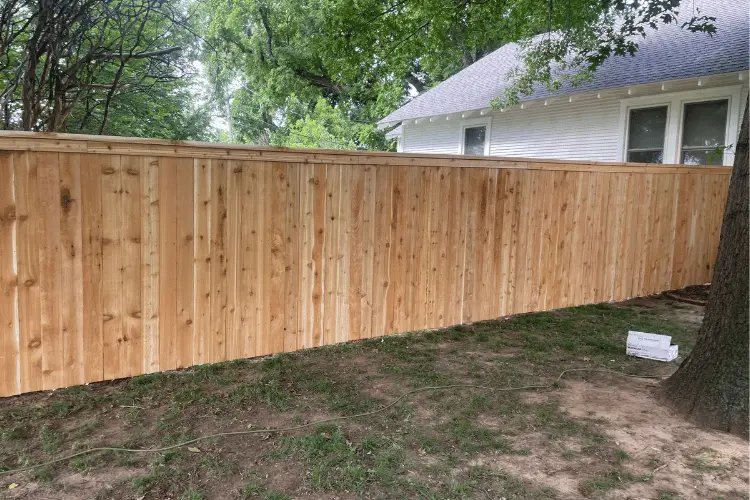
The most effective way to make a backyard more private is a solid privacy fence, cedar, metal-panel, or vinyl, tall enough (usually six feet) to block sightlines. You can boost it further with a lattice or louvered topper, screening plants and trees, and by closing gaps, giving you true seclusion for your yard.
Start With a Solid Privacy Fence
The foundation of a private backyard is a solid, sightline-blocking fence. Open fences like chain link and ornamental iron define a boundary but let everyone see straight through, so for real privacy you want a solid material, cedar wood, modern metal-panel, or vinyl, with no gaps between the boards.
A solid privacy fence does the heavy lifting: it blocks the view from neighbors and the street, screens your yard, and creates the enclosed, private feel that makes a backyard usable for relaxing, entertaining, and letting kids and pets play. Everything else in this guide builds on that foundation.
Get the Height Right
Height is what actually blocks sightlines, so it is the biggest factor in privacy. A six-foot fence is the standard for backyard privacy and is what most cities allow in back yards, blocking the view for people at ground level on the other side.
Where neighbors sit higher, on a slope, a raised deck, or a two-story home looking down, six feet may not fully do it, and some homeowners go to eight feet where the rules allow. Check your local height limits (our fence height rules guide covers them), but in general, taller equals more private.
Choose a Privacy-Focused Fence Style
Not all privacy fences are equally private. A standard picket-style privacy fence can develop small gaps as the wood dries, while board-on-board overlaps the pickets so there are never any gaps to see through, even as the cedar moves with the seasons, making it the most private wood option.
Cap-and-trim adds a finished top and bottom that also closes those edges. For a modern, completely solid look, metal-panel (R-panel) fencing gives full privacy with no gaps at all. Choosing a style built for privacy, rather than a basic one, makes a real difference in how sealed-off your yard feels.
Add Height With a Lattice or Louvered Topper
If you want more privacy or height than a standard fence, or where full height is restricted, a decorative topper is a great tool. A lattice, trellis, or louvered top section adds height and screening while looking intentional and attractive rather than like a wall.
Toppers also soften the look of a tall fence and can support climbing plants for even more screening. They are a popular way to gain a foot or two of privacy at the top of a six-foot fence, especially against elevated neighbors, while keeping the fence looking like a designed feature.
Close the Gaps and the Bottom
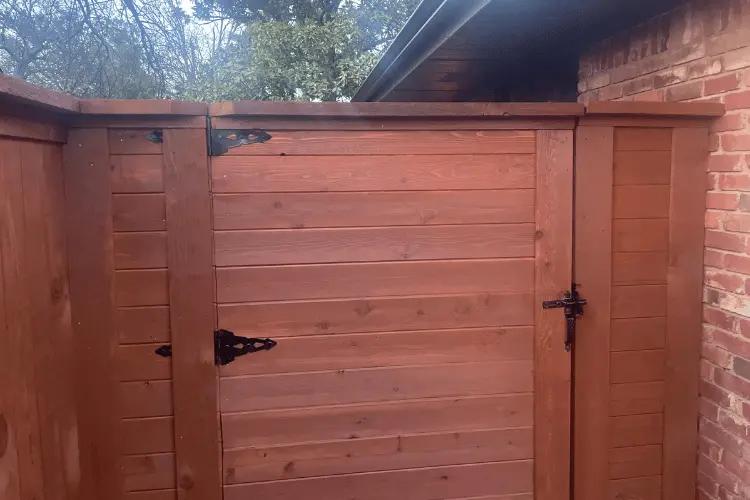
Privacy is only as good as the weakest gap. Even a tall solid fence loses privacy if there are gaps between the boards, a gap under the fence, or an open, see-through gate. For full seclusion, close them all: choose a gapless style, set the fence tight to the ground, and match the gate to the fence.
Pay attention to corners and transitions where fences of different heights or styles meet, since those are common spots for a sightline to sneak through. A fence built and finished for privacy, with the gaps handled, is what turns "mostly private" into truly private.
Layer in Screening Plants and Trees
Landscaping is a beautiful complement to a privacy fence. Tall shrubs, ornamental grasses, and evergreen trees planted along the fence line add a second layer of screening, soften the look, and can block views above the fence from elevated neighbors.
Evergreens are especially useful because they screen year-round, and a mix of heights creates depth and a lush, private feel. Planting a few feet off the fence, so air can move and the fence stays dry, gives you the privacy benefit without trapping moisture against the wood.
Layering: Fence Plus Plants
The most private and attractive backyards usually combine a solid fence with plantings rather than relying on either alone. The fence provides immediate, reliable privacy at the boundary; the plants add a softer, taller, living layer that fills in over time and screens the areas a fence cannot reach.
This layered approach also looks far better than a bare fence and gives you flexibility, block a specific sightline with an evergreen, soften a long fence run with mixed plantings, or add a climbing vine on a lattice topper. The fence and the garden work together.
Privacy From Elevated or Nearby Neighbors
The toughest privacy challenge is a neighbor who looks down into your yard, from a two-story home, a raised deck, or an uphill lot. A standard fence stops ground-level views but not a downward one, so this situation calls for extra height and vertical screening.
The solutions include a taller fence or a lattice-topped one where allowed, tall evergreen trees or a pergola with a canopy over a seating area, and positioning your patio or seating where the sightline is naturally blocked. Often it takes a combination, since no single element fully solves a downward view.
Creating Private Zones Within the Yard
Sometimes you do not need to enclose the whole yard, just to create a private spot. A pergola, a section of louvered screen, or a strategically placed tall planting can carve out a secluded patio, hot-tub area, or reading nook within a larger, more open yard.
This targeted approach can be more affordable and more attractive than walling off the entire perimeter, and it lets you keep an open feel elsewhere. A fence contractor and a bit of landscaping together can shape the exact private zones you want.
Balancing Privacy With Openness
Not everyone wants to feel walled in. If you value some privacy but not a tall solid barrier all the way around, there are middle-ground options. A shadowbox fence gives privacy from most angles while letting air and a little light through and looking the same from both sides. A spaced-picket or louvered fence screens the direct view while keeping an airier feel, and a lattice-topped lower fence adds height and screening without a solid slab.
You can also apply full privacy only where you need it, a solid section screening the patio or a neighbor’s window, with a more open fence elsewhere. Privacy does not have to be all-or-nothing; the right mix gives you seclusion where it matters and openness where it does not.
Mind the Height Rules
As you plan for privacy, keep the local rules in mind. Cities cap fence height, commonly around six feet in back yards, lower in front, and corner lots have sight-triangle limits, and HOAs often add their own restrictions. Toppers and total height can bump against those limits.
The good news is that most privacy goals fit within the rules, especially in back yards where taller fences are allowed. Our guides on fence height rules and HOA fence rules cover the specifics, and we build to code as part of the job.
How We Build Private Backyards
We build privacy fences across the OKC metro designed for real seclusion: solid cedar or modern metal-panel, the right height for your yard and neighbors, gapless styles like board-on-board, optional lattice or louvered toppers, and a tight bottom and matching gate so there are no sightlines left.
We can also point you toward the plantings that complement a fence for a layered, private, good-looking yard. If your backyard does not feel as private as you want, we are glad to help. A free on-site estimate is always available.
Get a Free Privacy Fence Quote
We come to your property anywhere in the OKC metro, walk your yard and your privacy goals, and build a fence that gives you the seclusion you want. Every install carries a one-year workmanship warranty.
Call us at (405) 767-4828 or request a free quote to get started.
Good to Know
Frequently Asked Questions
Start with a solid privacy fence, cedar, metal-panel, or vinyl, tall enough (usually six feet) to block sightlines, in a gapless style like board-on-board. Add a lattice or louvered topper for extra height, layer in screening plants and trees, and close any gaps at the boards, bottom, and gate.
Solid cedar wood privacy is the most popular for its balance of privacy, looks, and value, with board-on-board giving gap-free coverage. Modern metal-panel (R-panel) fence offers full privacy with no gaps and low maintenance. The best is a solid, gapless style at a height that blocks the views you want gone.
Six feet is the standard for backyard privacy and what most cities allow in back yards, blocking ground-level views. Where neighbors sit higher, on a slope, raised deck, or second story, some homeowners go to eight feet where the rules allow, or add a lattice topper for extra screening.
You can add a lattice, trellis, or louvered topper to gain height and screening, close any gaps between boards, add a rot board at the bottom, and plant tall shrubs or evergreens along the fence line for a second layer. These upgrade the privacy of a fence you already have.
Keep Reading
Explore Our Fence Services