Published · By Frank DeLozier, Owner & Master Fence Builder
For wind and noise, a fence needs to be solid, tall, and dense, and, in Oklahoma, built strong enough to survive what it blocks.
To block wind and noise, a fence needs to be solid (no gaps), tall, and made of dense material, a solid cedar or metal-panel privacy fence works far better than an open or gappy one. For noise, mass and height matter most; for wind, a fully solid fence blocks it but must be built extra strong to survive Oklahoma gusts.
Can a Fence Really Block Wind and Noise?
A fence can meaningfully reduce both wind and noise, though it is important to set expectations: a fence reduces them, it does not eliminate them. A well-designed solid fence can take the bite out of a steady wind and noticeably soften road or neighbor noise, making a yard far more comfortable, but sound and air both find ways around a barrier.
The same qualities help with both: solid, tall, and dense. A fence built to block wind and noise is fundamentally different from an open decorative fence, and getting the design right is what determines how much difference it actually makes.
How Fences Reduce Noise
A fence fights noise in two ways: by blocking the direct line of sound and by having enough mass to reflect and absorb some of it. Sound travels in waves, and a solid, heavy barrier in the path interrupts those waves, while a light or gappy fence lets the sound pass right through.
The keys to a noise-reducing fence are therefore mass (denser, heavier material blocks more), height (tall enough to break the line of sound to the source), and no gaps (sound leaks through any opening). A tall, solid, dense fence is what turns down the volume of a busy road or a noisy neighbor.
The Best Fences for Blocking Noise
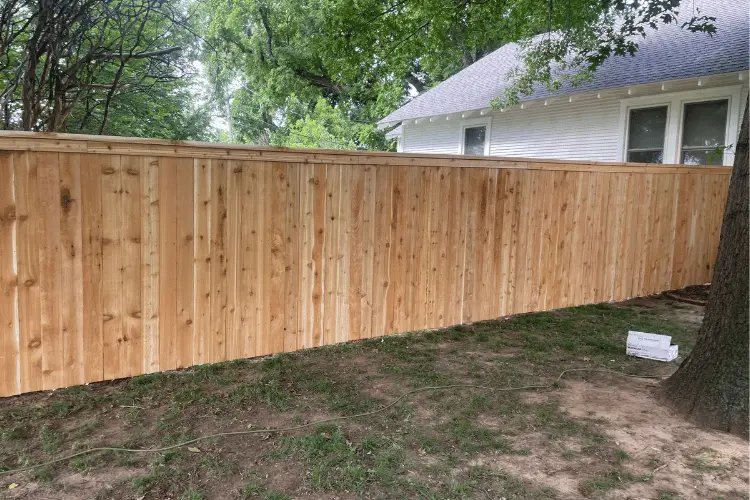
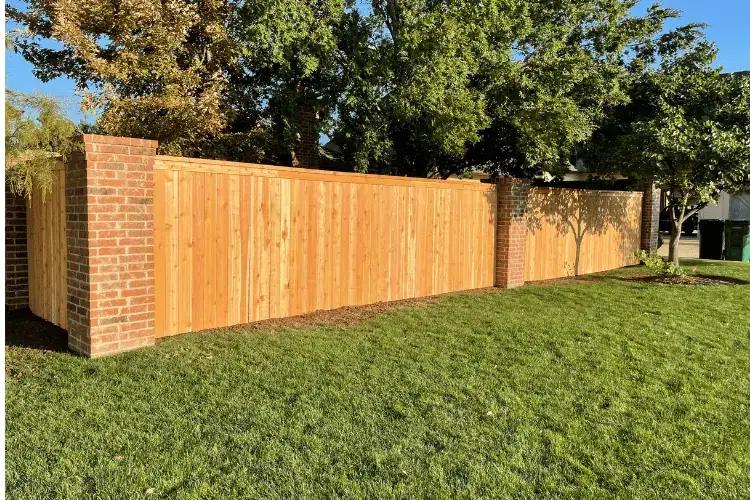
For noise reduction, the best fences are solid, tall, and made of dense material. A solid cedar privacy fence, especially board-on-board (which has extra mass and no gaps), is a strong performer and the most common choice. Modern metal-panel fencing is dense and completely gapless, so it also blocks sound well.
For maximum noise blocking, mass masonry, a brick or stone wall, is the ultimate barrier, though it is a bigger project than a fence. Among fences, the denser and more solid, the better, which is why an open chain link or spaced-picket fence does almost nothing for noise.
How Fences Block Wind
A solid fence blocks wind by standing in its path, creating a sheltered pocket on the leeward side. Downwind of a solid barrier, the wind speed drops significantly for a distance several times the fence’s height, which is why a solid privacy fence can make a patio or garden noticeably calmer.
Height and solidity drive the effect: a taller, fully solid fence shelters a larger area more effectively. This is genuinely useful in Oklahoma, where a constant wind can make a yard less pleasant, but it comes with an important structural catch.
The Wind Paradox: Solid Blocks More, Takes More
Here is the crucial trade-off: the very solidity that makes a fence block wind also makes the wind hit it harder. A fully solid fence catches the entire force of the wind like a sail, so while it shelters your yard beautifully, it also puts enormous load on the posts and structure, especially in Oklahoma’s high winds.
This is the paradox of a wind-break fence: to block the wind, it must also survive the wind. A solid fence built to an ordinary standard will block wind right up until a big gust pushes it over. Blocking wind and surviving wind are two different problems that must be solved together.
Building a Wind-Break Fence to Survive Oklahoma
Because a solid wind-blocking fence catches so much force, it has to be built extra strong for Oklahoma. That means posts set deeper in concrete, spaced closer together, and often galvanized steel posts on exposed sites, along with strong bracing at corners and gates. The fence that blocks the wind best is also the one most at risk if it is not built for it.
Our guide on wind-resistant fences covers the structural side in detail. The short version: if you want a solid fence to break the wind, invest in the foundation, or the wind you are trying to block will eventually take the fence down.
Materials for Wind and Noise
The best materials for both wind and noise are the solid, dense ones. Cedar wood privacy, particularly board-on-board for its added mass and gap-free coverage, is the popular choice and performs well on both fronts. Modern metal-panel fencing is dense, solid, and stands up to wind exceptionally when framed in steel.
For the ultimate barrier, masonry (brick or stone) blocks the most of both but is a wall, not a fence. Vinyl privacy fence blocks wind and noise reasonably too. The through-line is density and solidity: whatever the material, gaps and lightness are the enemy of blocking wind and sound.
Height Matters for Both
Height amplifies both effects. A taller fence breaks the line of sound to a higher source and shelters a larger downwind area from the wind, so where the rules allow, a taller solid fence blocks more of both than a shorter one.
Six feet is the common maximum in back yards and a good baseline; where more height is allowed and the situation calls for it, eight feet blocks more. Just remember the taller and more solid the fence, the stronger the build has to be to handle the wind load, so height and structure go together.
Close Every Gap
Gaps are the enemy of both wind and noise reduction. Sound leaks through any opening, and wind funnels through gaps at higher speed, so a fence with spaces between the boards, a gap at the bottom, or an open gate loses much of its blocking power.
For the best wind and noise performance, choose a gapless style like board-on-board or metal-panel, set the fence reasonably tight to the ground, and make sure the gate is solid too. Closing the gaps is what lets a solid fence actually deliver on blocking wind and sound.
Combine the Fence With Plantings
As with privacy, a fence plus landscaping outperforms a fence alone for wind and noise. Dense evergreen trees and shrubs along a fence add mass and absorb sound, and a row of trees acts as a windbreak that extends above and beyond the fence.
This layered approach, a solid fence backed by dense plantings, is the most effective way to quiet and shelter a yard short of building a masonry wall. The fence gives the immediate, reliable barrier; the plants add absorption and height over time.
Set Realistic Expectations
It is worth being realistic: a fence reduces wind and noise, it does not create a soundproof, windless bubble. Sound bends over and around barriers, and wind eventually re-forms downwind, so you will still hear and feel some of both. What a good solid fence does is take the edge off, often enough to make a real difference in comfort.
For most homeowners, meaningfully calmer and quieter is a great result, and a well-built solid privacy fence delivers it. If you need more, layering in dense plantings or stepping up to a masonry wall gets you closer, at greater cost.
How We Build Wind and Noise Fences
We build solid privacy fences across the OKC metro that block wind and noise and are engineered to survive the wind they block: dense cedar or metal-panel, gapless styles, the right height, and, crucially, a strong foundation of deep, closely spaced, concrete-set posts, with steel posts available for the most exposed lots.
A wind-break fence is one place where the build quality really shows, and it is what we do. If you want a calmer, quieter yard, we are glad to help. A free on-site estimate is always available.
Get a Free Fence Quote
We come to your property anywhere in the OKC metro, walk your yard and what you want to block, and build a solid fence that shelters it, and stands up to Oklahoma weather. Every install carries a one-year workmanship warranty.
Call us at (405) 767-4828 or request a free quote to get started.
Good to Know
Frequently Asked Questions
Yes, a solid, tall, dense fence meaningfully reduces noise by blocking the line of sound and reflecting and absorbing some of it. It reduces rather than eliminates noise, since sound bends around barriers, but a board-on-board cedar or metal-panel fence can noticeably soften road or neighbor noise.
The densest, most solid, gapless fences block the most noise. Board-on-board cedar (extra mass, no gaps) and solid metal-panel fencing are strong performers. For the ultimate barrier, a masonry brick or stone wall blocks the most, but it is a wall rather than a fence. Open fences do almost nothing.
A solid fence blocks wind by standing in its path, creating a sheltered pocket downwind for a distance several times the fence’s height. The catch in Oklahoma is that a solid fence catches the full force of the wind, so it must be built extra strong, deep concrete-set posts, tight spacing, to survive what it blocks.
For blocking wind, a solid, tall privacy fence in cedar or metal-panel, but it must be built for the wind: posts set deep in concrete, spaced closely, often on galvanized steel posts, with strong bracing. To reduce wind load instead, a shadowbox or spaced style lets some air through while still standing.
Keep Reading
Explore Our Fence Services