Published · By Frank DeLozier, Owner & Master Fence Builder
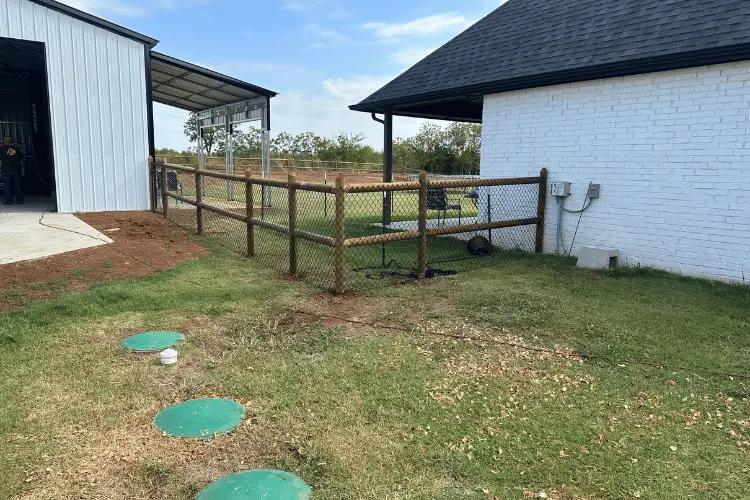
A properly stretched chain link fence stays taut and straight; loose fabric is what sags and waves.
To install a chain link fence, set the terminal (corner, end, and gate) posts in concrete first, then the line posts, add the top rail, hang and stretch the chain-link mesh tight with a come-along, tie it to the rail and posts, and hang the gates. The key is tension: loose mesh sags and waves.
How to Install a Chain Link Fence
Tools
- Post hole digger or power auger
- Level
- Come-along or fence stretcher
- Fence pliers / tie tool
- Tape measure
- Hacksaw
Materials
- Terminal and line posts
- Top rail
- Chain-link fabric
- Tension bars and bands
- Tie wires and rail ends
- Post caps
- Gate and hardware
- Concrete and gravel
- 1
Set the terminal posts in concrete
Lay out the fence, then set the corner, end, and gate (terminal) posts first, deep and in concrete, because they carry all the tension. Let them cure before stretching anything.
- 2
Set the line posts
Set the line posts between the terminals, spaced up to about 10 feet on center and standing slightly shorter than the terminals so the top rail runs cleanly. Set them in concrete and let them cure.
- 3
Add caps and run the top rail
Put loop caps on the line posts and rail-end caps on the terminals, then run the top rail through the loop caps and into the terminal fittings, cutting to length as needed.
- 4
Attach the fabric to the first terminal
Weave a tension bar through the end of the chain-link fabric and bolt it to the first terminal post with tension bands, so the fabric is anchored before you stretch it.
- 5
Unroll and stand up the fabric
Unroll the fabric along the fence line and stand it up against the posts and top rail, keeping it roughly in position for stretching.
- 6
Stretch the fabric tight
Use a come-along or fence stretcher to pull the fabric taut along the run until it barely gives when squeezed, then weave a tension bar at the far end and band it to the far terminal post.
- 7
Tie off and hang the gates
Tie the fabric to the top rail and line posts with tie wires at regular intervals, trim any excess, then hang the gates on their hardware and check that they latch.
Terminal Posts vs. Line Posts: Know the Difference
Chain link has two kinds of posts, and the distinction is everything. Terminal posts, at the corners, ends, and gates, are heavier and set deeper because they anchor the tension of the whole fence. Line posts, in between, are lighter and just support the fabric and top rail.
Get the terminals right and the fence stays tight; under-build them and no amount of stretching will keep the fabric taut. That is why we set terminal posts deep in concrete and give them time to cure before we stretch a single foot of fabric.
Why Tension Is Everything in Chain Link
A chain link fence is only as good as how tight the fabric is stretched. Loose fabric sags, waves, and bulges when leaned on, and it looks unfinished. Properly stretched fabric is taut, straight, and springy, and it stays that way for decades.
Tension is created by pulling the fabric with a come-along against solid terminal posts, then locking it with tension bars and bands. This stretching step is the part DIYers most often under-do, and it is the single biggest difference between a crisp chain link fence and a saggy one.
Setting Posts for Chain Link in Oklahoma
Line posts for chain link can be spaced a bit wider than wood, commonly up to about 10 feet on center, because the open mesh catches little wind. The terminals, though, take the same care as any load-bearing post: deep holes, concrete, and cure time.
As with every fence here, we set posts in concrete so the run holds its tension and line through Oklahoma weather. Post caps and a continuous top rail tie the line posts together and keep the top edge straight, which matters both structurally and visually.
Choosing Gauge and Coating
Chain link fabric comes in different gauges (thicknesses) and finishes. Residential fabric is lighter, while commercial and industrial jobs use heavier, lower-gauge fabric and larger framework for security and durability. Match the gauge to the job rather than over- or under-building it.
For finish, galvanized is the classic silver mesh and the most economical, while black or green vinyl-coated fabric looks cleaner in a backyard, blends into landscaping, and adds corrosion protection. Both install the same way; the choice is cost and looks.
Common Chain Link Mistakes
The frequent errors are all avoidable: setting terminal posts too shallow or without enough concrete so they cannot hold tension, skipping or poorly seating the top rail, and, most of all, not stretching the fabric tight enough. Each one leaves a fence that sags and waves.
Tie-wire spacing matters too; too few ties let the fabric pull away from the rail and posts over time. Spacing ties at regular intervals along the top rail and each line post keeps the fabric married to the framework.
Add-Ons: Privacy Slats, Gates, and Barbed Top
Chain link is easy to tailor after the fabric is up. Privacy slats woven vertically through the mesh turn an open fence into a screen; gates, walk and drive, hang on the terminal posts you already set; and on commercial jobs a barbed-wire top adds security height.
Keep in mind that slats and windscreen turn an open fence into a more solid one, so it catches more wind and the posts and tension have to account for it. Plan any add-ons before you set posts so the framework is built to carry them.
How Long Does It Take to Install Chain Link?
Chain link is one of the faster fences to install because there are no individual pickets to hang. A professional crew can put up a typical residential run in about a day once the terminal-post concrete has cured. A DIY install takes longer, especially the first time, because setting solid terminals and stretching the fabric tight are the slow, skill-dependent steps.
As with any fence, the schedule includes cure time: you set the posts, wait for the concrete, and then do the top rail, fabric, and gates. Building that cure time into your plan keeps you from rushing the stretch, which is where a hurried chain link install goes wavy.
Chain Link Fence Maintenance
Part of chain link’s appeal is how little it asks of you. There is no staining or sealing; galvanized and vinyl-coated fabric shrug off weather for decades. The main upkeep is occasional: re-tightening a tie wire that has worked loose, straightening a post that took a hit, and keeping vegetation from growing into the mesh.
On vinyl-coated fence, an occasional rinse keeps it looking clean. Done right at install, with tight fabric and posts set in concrete, a chain link fence is about as close to set-and-forget as fencing gets, which is a big part of its long-term value. If a section ever does take damage, chain link is also easy to repair, a bent post straightened or a torn area patched and re-stretched, without redoing the whole fence.
When to Hire a Pro for Chain Link
A short, low chain link run on flat ground is a reasonable DIY project. The parts that trip people up are setting solid terminal posts, running the top rail cleanly, and, above all, stretching the fabric truly tight, which takes the right tools and a feel for it.
For a long run, a taller security fence, commercial work, or any job where you want it crisp and warrantied, hiring out makes sense. Metro Fence installs residential and commercial chain link across the OKC metro, stretched tight and set in concrete, with a one-year workmanship warranty. A free estimate is always available.
Good to Know
Frequently Asked Questions
Terminal posts (corners, ends, and gates) should be set deep in concrete because they hold the fence’s tension; in Oklahoma we treat them like any load-bearing post. Line posts can be a bit shallower since the open mesh catches little wind, but we still set them in concrete.
Anchor one end of the fabric to a terminal post with a tension bar and bands, then use a come-along or fence stretcher to pull the fabric taut along the run until it barely gives, and lock the far end to the next terminal post with another tension bar before tying it off.
Chain link line posts are commonly spaced up to about 8 to 10 feet on center, with many local codes capping it at 10 feet. The terminal posts fall at every corner, end, and gate regardless of spacing, and they are set deeper because they hold the tension.
A short, low run on flat ground is doable for a handy DIYer. The hard parts are setting solid terminal posts, running the top rail, and stretching the fabric truly tight. For long runs, tall security fence, or a crisp, warrantied result, hiring a pro is worth it.
Keep Reading
Explore Our Fence Services