Published · By Frank DeLozier, Owner & Master Fence Builder
Most dogs escape at the bottom of the fence; blocking that gap is the key to keeping a digger contained.
To keep a dog from digging under a fence, block the gap at the bottom: bury an L-shaped wire footer or a mesh apron along the base, add a concrete footer or a row of pavers, or install a dig guard. Setting the fence bottom close to the ground and addressing why the dog digs also help keep an escape artist contained.
How to Stop a Dog Digging Under a Fence
Tools
- Shovel
- Wire cutters
- Work gloves
- Rubber mallet
Materials
- Galvanized wire mesh or hardware cloth
- Landscape staples or stakes
- Pavers or concrete
- Gravel
- 1
Find the dig spots
Walk the fence line and note where your dog digs, usually corners, gate edges, and any low spot. Focus your barrier on those areas first, then the rest of the line if the dog moves on.
- 2
Choose a barrier method
Pick the approach that fits your yard: an L-footer of buried wire mesh, a mesh apron, a row of pavers, or a concrete footer along the base of the fence.
- 3
Install an L-footer
Dig a shallow trench along the fence, attach galvanized wire mesh to the bottom of the fence, and bend it into an L that extends outward along the ground before you bury it, so digging hits wire.
- 4
Or lay pavers or a concrete footer
As an alternative, lay a row of pavers or pour a narrow concrete footer tight against the base of the fence so there is a hard surface the dog cannot dig through.
- 5
Close the gap to the ground
Make sure the bottom of the fence sits close to the ground with no gap a dog can start under; add a kickboard or lower the pickets if there is a gap.
- 6
Backfill and secure
Cover the buried mesh with soil and tamp it down, and secure any aprons flat to the ground with landscape staples so the dog cannot pull them up.
- 7
Address the behavior
Reduce the urge to dig by giving your dog more exercise, shade, and enrichment, and by supervising early on, since a bored or under-exercised dog digs more.
Why Dogs Dig Under Fences
Dogs dig under fences for a handful of reasons: boredom or too little exercise, prey drive chasing something on the other side, the urge to roam (especially if not spayed or neutered), anxiety, or simply because it is cool and comfortable to lie in the dug-out dirt. Understanding the why helps, because the most reliable solution combines a physical barrier with addressing the cause.
That said, a determined digger needs a physical stop regardless of the motivation. The good news is that dogs escape at the bottom of the fence far more than over the top, so blocking the base solves most escapes.
Close the Gap at the Bottom
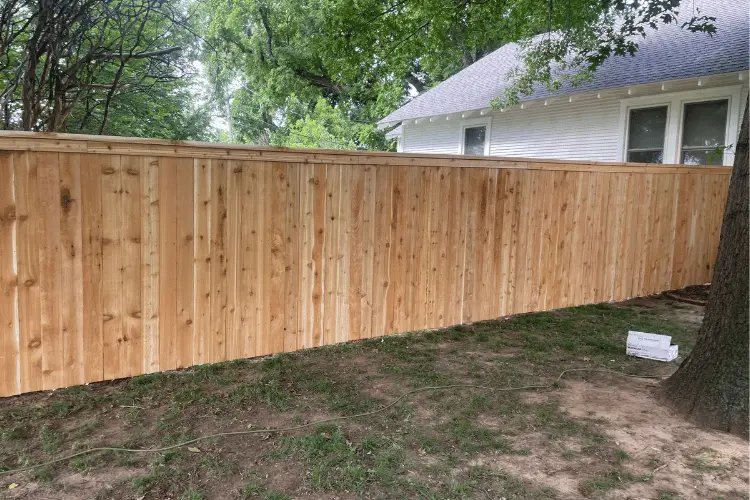
The first and simplest step is making sure there is no gap between the bottom of the fence and the ground for a dog to start under. A fence built tight to the grade, or with a kickboard along the base, gives a digger nowhere easy to begin.
On uneven ground, low spots are where dogs exploit, so pay attention to dips and corners. Filling or blocking those low points is often enough for a casual digger, and it is the foundation for the stronger barriers below.
The L-Footer Method
The most effective DIY dig barrier is an L-footer. You attach galvanized wire mesh or hardware cloth to the bottom of the fence and bend it outward into an L shape that lies flat along the ground, extending a foot or two out from the fence, then bury it under a few inches of soil.
When the dog digs at the base, it hits the buried horizontal wire and cannot get through. Because it extends outward, it also stops the dog from simply digging farther back. It is the go-to solution for serious diggers and works with almost any fence type.
Buried Mesh and Chicken-Wire Aprons
A variation on the L-footer is a surface or shallow-buried apron: mesh laid flat on the ground along the fence and staked down, sometimes with the near edge attached to the fence. Grass grows up through it and it disappears from view, while still stopping digging.
Aprons are a little easier to install than a full buried L-footer since they need less trenching, and they work well for dogs that dig right at the fence line. Secure them flat with landscape staples so the dog cannot fold them up.
Concrete and Paver Footers
For a permanent, no-maintenance stop, a hard footer at the base of the fence is hard to beat. A row of pavers or landscaping stones laid tight against the fence, or a narrow concrete footer poured along the base, gives the dog a solid surface instead of diggable dirt.
This is the most durable option and looks tidy, essentially a mow strip that doubles as a dig barrier. It takes more effort to install than wire, but once it is in, it is done, and it stops even determined diggers cold.
Dig-Guard Products
There are also manufactured dig-guard products, rolls of coated wire or rigid panels designed to attach to the bottom of a fence and extend down or out. They can be a convenient middle ground between DIY wire and a concrete footer, and some are made to be nearly invisible.
These work on the same principle as an L-footer, put something the dog cannot dig through at the base, just in a ready-made form. They are worth considering if you would rather buy a solution than fabricate one.
Choosing a Dog-Friendly Fence Material
The fence itself matters for diggers and escape artists. A solid privacy fence removes the visual stimulation that sends some dogs digging to chase what they see, while chain link is durable and hard to chew but lets the dog see out, which can worsen prey-driven digging.
Whatever the material, the bottom is what matters for digging, so pairing the right fence with a dig barrier is the real solution. Our guide on the best dog-proof fences covers material choice for jumpers, climbers, and diggers in more depth.
Address the Root Cause
A physical barrier stops the escape, but reducing the urge to dig makes everything easier. More exercise, mental enrichment, shade and a comfortable spot on hot days, and spaying or neutering a dog driven to roam all cut down on digging. A tired, content dog digs far less than a bored, restless one.
For dogs that dig one favorite spot out of habit, redirecting them, and sometimes giving them a sanctioned digging area, can help. Combine the behavior side with a solid bottom barrier and even a committed escape artist stays home.
When to Call a Pro
If your fence has gaps, a rotting or leaning bottom, or was never built tight to the ground, the most reliable fix is often to address the fence itself, resetting it, adding a kickboard, or building a new fence designed with pets in mind.
Metro Fence builds and repairs fences across the OKC metro with dog owners in mind, tight to the grade, solid gates, and dig barriers where needed. If your escape artist has outsmarted the current fence, a free on-site estimate is always available. Sometimes the simplest permanent fix for a chronic digger is a proper kickboard and a tight, well-set fence bottom, which we can add to an existing fence or build in from the start.
Get a Free Fence Quote
We come to your property anywhere in the OKC metro and build or repair a fence that keeps your dog safely in, with the right height, a tight bottom, and dig protection where it is needed. Every install carries a one-year workmanship warranty.
Call us at (405) 767-4828 or request a free quote to get started.
Good to Know
Frequently Asked Questions
Block the base of the fence. The most effective methods are an L-footer (wire mesh bent outward and buried along the fence), a staked-down mesh apron, or a row of pavers or a concrete footer. Close any gap to the ground, and reduce digging by giving the dog more exercise and enrichment.
An L-footer is wire mesh attached to the bottom of the fence and bent outward into an L that lies flat along the ground and is buried a few inches down. When a dog digs at the base, it hits the buried horizontal wire and cannot get through, which is why it stops serious diggers.
Yes. A row of pavers or a narrow concrete footer poured tight against the base of the fence gives the dog a solid surface instead of diggable dirt, making it one of the most durable, no-maintenance ways to stop a determined digger.
Common reasons are boredom or too little exercise, prey drive chasing something outside, the urge to roam, anxiety, or seeking a cool spot to lie in. Addressing the cause with exercise and enrichment, plus a physical dig barrier at the base, is the most reliable fix.
Keep Reading
Explore Our Fence Services