Published · By Frank DeLozier, Owner & Master Fence Builder
Cedar wood and vinyl privacy fences cost about the same to install up front in Oklahoma. The real difference is over time: wood needs periodic staining and occasional board repairs, while vinyl needs almost none. So which is cheaper long-term depends on how long you keep the fence and how much upkeep you are willing to do yourself.
Up-Front Cost: Wood vs. Vinyl
On the day it goes in, a good cedar wood privacy fence and a quality vinyl privacy fence land in a similar price range. Both are mid-range fences, above chain link and below ornamental iron. Cedar can start a little lower for a basic build, and premium vinyl can climb with higher-grade panels, but the two are close enough that up-front cost alone rarely decides it.
What actually separates them is everything that happens after installation. To choose well, you have to look past year one at the maintenance, the lifespan, and what it takes to repair each when something goes wrong.
Long-Term Cost: Maintenance and Lifespan
This is where the two diverge. A wood fence should be cleaned and re-stained or sealed every few years to protect the wood, hold its color, and get the longest life out of it. That is either your weekend and the cost of stain, or a cost to hire out, repeated over the life of the fence.
Vinyl is close to maintenance-free. It never needs staining or sealing, and it cleans up with a hose and occasionally some soap. Over a long ownership, that saved upkeep is the heart of the vinyl argument: a higher-hassle wood fence versus a hands-off vinyl one. Whether that tips the lifetime math toward vinyl depends on how long you will own the fence and whether you would do the wood upkeep yourself or pay for it.
Which Lasts Longer in Oklahoma's Climate?
Both can last a long time when they are built right, and both are tested by Oklahoma weather. Western Red Cedar naturally resists rot and insects and, kept sealed, holds up well through the state’s heat, cold, and humidity swings. Neglected and left unsealed, any wood fence weathers faster.
Quality vinyl handles UV and temperature swings well, but there is a real spread in vinyl quality: thin, low-grade panels can grow brittle and crack in extreme cold or fade in relentless sun, while thicker, better-formulated vinyl holds up. With both materials, the install matters as much as the material, and a tall solid fence of either type has to be built to take Oklahoma wind, with posts set deep in concrete.
The Look and Feel Difference
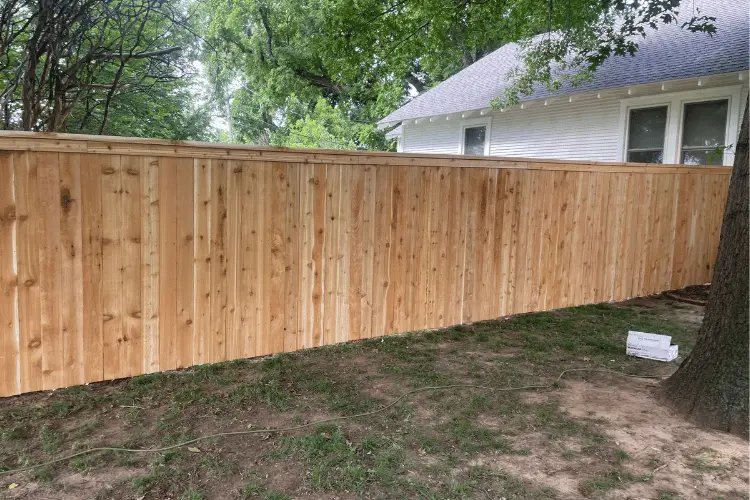
Cost aside, the two fences feel different. Wood is natural and warm, and it is endlessly customizable: board-on-board, cap-and-trim, different picket tops, and any stain color you like, plus it can be matched and blended into an existing wood fence. Many homeowners simply prefer the look of real cedar.
Vinyl is uniform, clean, and consistent, and it stays that way with no effort. The trade-off is fewer style and color options and a more manufactured look. Neither is better, they are different priorities: character and customization versus uniformity and low upkeep.
Repairs: What Happens When Something Breaks?
Repairs are an underrated part of the cost comparison. When a wood fence takes damage, a cracked picket or a broken rail, the fix is usually cheap and simple: swap the affected boards and the fence is whole again, and a little weathering blends the new wood in.
Vinyl repairs can be trickier. Because panels lock together, replacing a damaged section can mean more disassembly, and matching the exact color and profile of an older vinyl fence is not always possible, so a repair can stand out. Neither is a dealbreaker, but wood’s easy, low-cost repairability is a genuine long-term advantage, especially in a storm-prone state.
Which Is Cheaper Long-Term for You?
There is no single answer, because it depends on you. If you will own the home a long time and would rather not think about the fence, vinyl’s near-zero maintenance can make it the cheaper choice over the years despite similar up-front cost. If you like the look of real wood, do not mind occasional staining, or want the cheapest and easiest repairs, cedar often wins the lifetime math.
Your time horizon is the deciding factor. Over a short window the two are close; the longer you keep the fence, the more the maintenance difference adds up, in vinyl’s favor on upkeep and in wood’s favor on repair cost.
Our Take for Oklahoma Yards
Cedar wood privacy is the most popular fence in the OKC metro for a reason: it balances cost, looks, wind resistance, and easy repairs, and it is what most local yards are built with. It rewards a little upkeep with decades of service and a warm, natural look.
If low maintenance is your top priority, we build modern metal-panel (R-panel) privacy fence as a durable, no-stain alternative that stands up to Oklahoma wind exceptionally well. During a free estimate we will walk through what fits your budget, your yard, and how hands-on you want to be.
Resale, Curb Appeal, and Buyer Preference
When it comes time to sell, both fences read as a plus over no fence or a failing one, but they appeal to buyers differently. A clean, natural cedar fence has a warm, classic look that many Oklahoma buyers expect, and because it can be stained or repaired, a new owner can refresh it to taste. Vinyl’s appeal is the promise of no upkeep, which some buyers value highly and others feel looks less premium than real wood.
Neither dramatically outperforms the other on resale, and what matters most is that whatever fence is there is straight, solid, and well maintained, because a leaning or mismatched fence of any material works against you. If resale is on your mind, the condition and quality of the installation matter more than the wood-versus-vinyl choice itself.
A Quick Word on Composite Fencing
You may also run across composite fencing, boards made from a blend of wood fibers and plastic, marketed as a middle ground between wood and vinyl. It aims for a more wood-like look with vinyl-like low maintenance, but it is a smaller part of the residential market and typically costs more up front.
For most OKC-metro yards the practical choice still comes down to cedar wood for value, character, and easy repairs, or a low-maintenance option like vinyl or modern metal-panel fence. We are glad to talk through where composite does and does not make sense for your project during a free estimate.
Installation: Why Build Quality Matters for Both
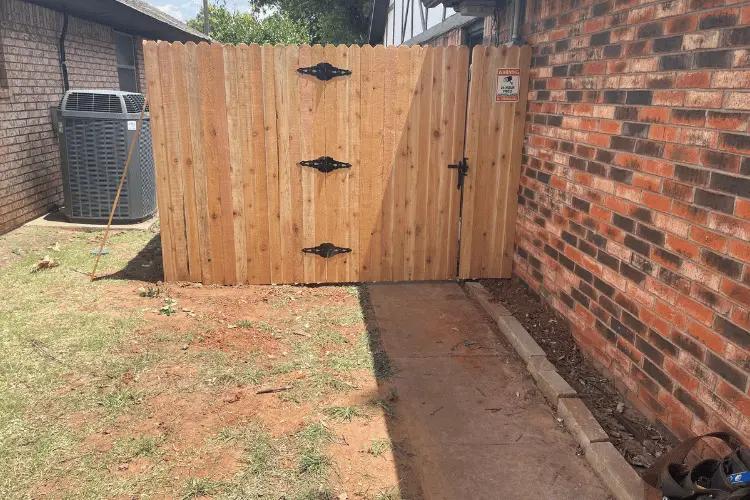
Whichever material you choose, the install decides how long it lasts and whether it survives Oklahoma weather, and that affects the true cost as much as the material does. A tall solid privacy fence, wood or vinyl, is a wind sail, so the posts have to be set deep in concrete and spaced correctly, and the gates have to be built square on solid posts. A bargain install of either material that skimps on those things fails early, and a fence you have to rebuild is the most expensive fence there is.
That is why comparing wood and vinyl on sticker price alone can mislead you. Ask any contractor how deep the posts go, whether they are set in concrete, and how the gates are built. A well-installed cedar fence outlasts a poorly installed vinyl one and vice versa, so the quality of the build belongs in the cost conversation right alongside the material.
Total Cost of Ownership: A Simple Way to Think About It
Instead of just comparing installation prices, think in terms of total cost of ownership: what you pay to install the fence, plus what you spend maintaining it over the years you own it, plus the likelihood and cost of repairs. Wood carries a recurring maintenance line, staining or sealing, but cheap, easy repairs. Vinyl carries almost no maintenance but pricier, trickier repairs when a panel is damaged.
Run that math against your own situation. A homeowner staying five years who does not mind staining may find cedar the better all-around value; a homeowner staying twenty years who wants zero upkeep may prefer vinyl or a metal-panel fence. There is no universally cheaper option, only the one that is cheaper for how you will actually use and keep the fence.
Get a Quote for Your Privacy Fence
We come to your property anywhere in the OKC metro, walk through your material and style options, and give you a free, written, no-obligation estimate. Every install carries a one-year workmanship warranty.
Call us at (405) 767-4828 or request a free quote. Financing through Tinker Federal Credit Union is available if you would rather spread the cost.
Good to Know
Frequently Asked Questions
Up front they are similar, both mid-range fences. Vinyl usually wins on long-term cost because it needs almost no maintenance, while wood needs periodic staining. Wood wins on repair cost, since swapping a damaged board is cheap and easy.
To get its longest life and hold its color, yes, a wood fence should be cleaned and re-stained or sealed every few years. You can let cedar weather to gray if you prefer, but sealing protects the wood and extends its lifespan in Oklahoma’s climate.
Quality vinyl handles Oklahoma’s temperature swings well, but there is a real range in vinyl grades: cheap, thin panels can become brittle in extreme cold or fade in strong sun, while thicker, better vinyl holds up. As with wood, the install and the material grade both matter.
Wood. A cracked picket or broken rail on a wood fence is a quick, low-cost swap. Vinyl panels lock together, so replacing a damaged section takes more work and matching an older panel’s color and profile is not always possible.
Keep Reading
Explore Our Fence Services